AI
AI 身體預覽
查看您目標體重的 AI 生成照片
新功能:從任一儀表板卡片分享你的進度。此外,體重預測更準確,並可讀取完整的「健康」體重紀錄。
功能
滑動查看應用程式的截圖
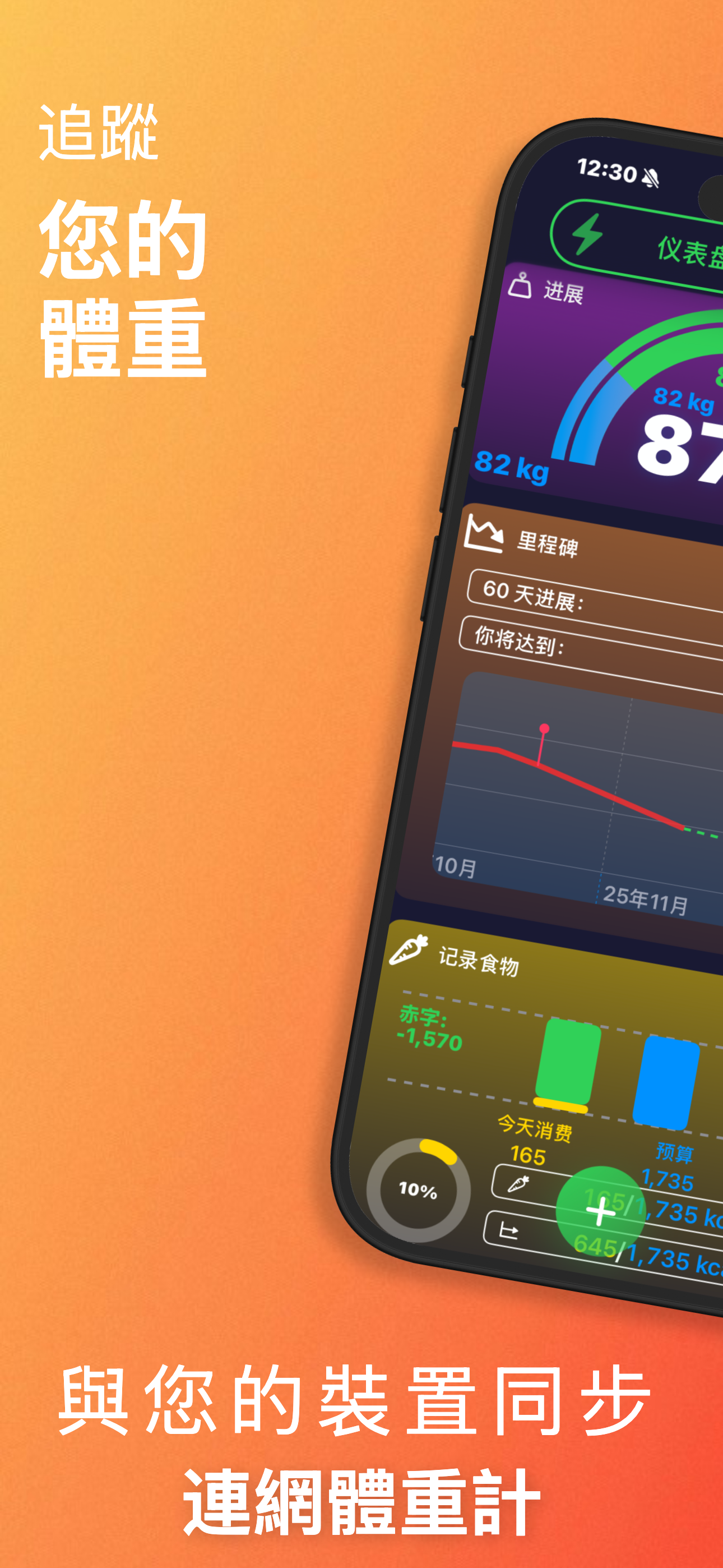
你的減重旅程
從開始到目標體重可視化你的進展
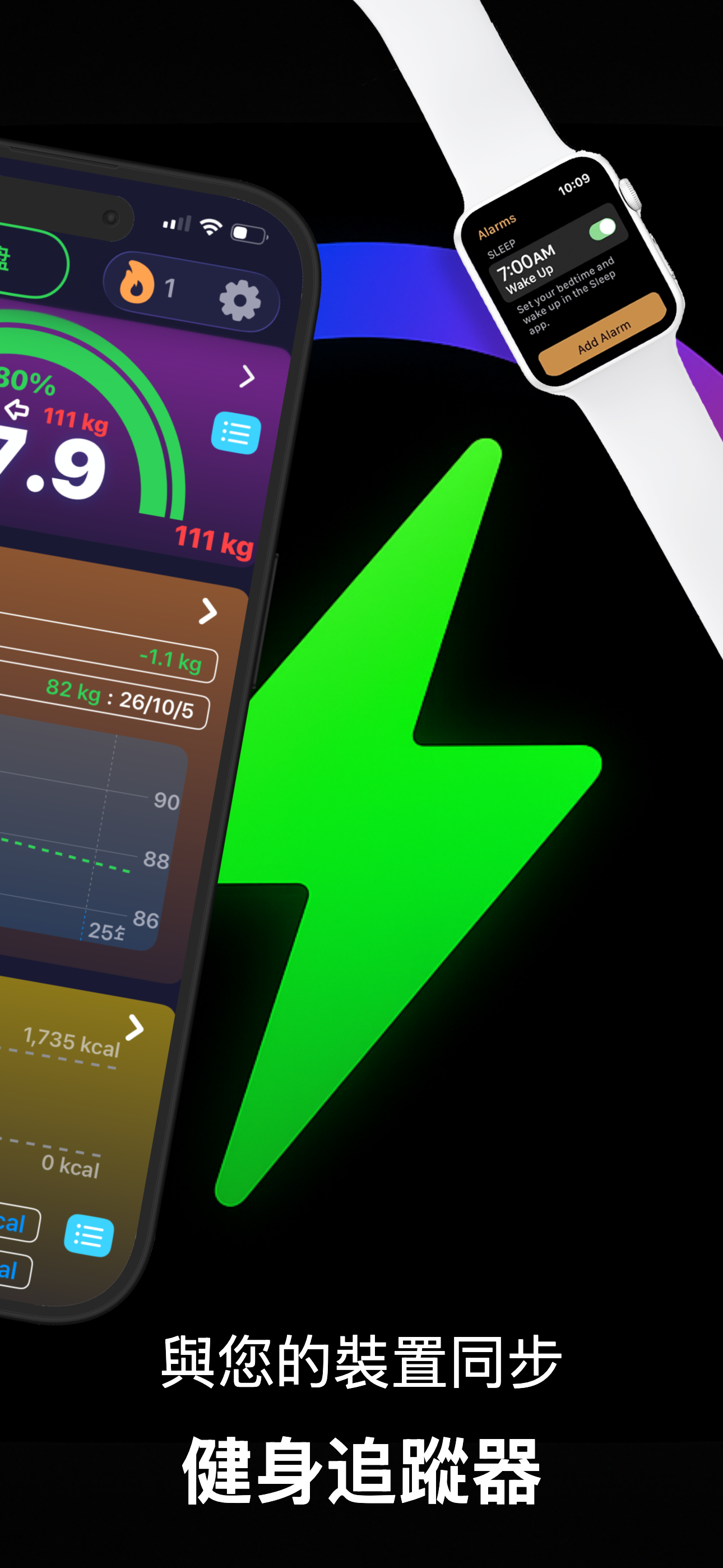
蘋果健康整合
同步你的健身追蹤器。根據運動強度可視化體重影響。沒有追蹤器?我們的「添加活動」功能涵蓋45種以上的運動
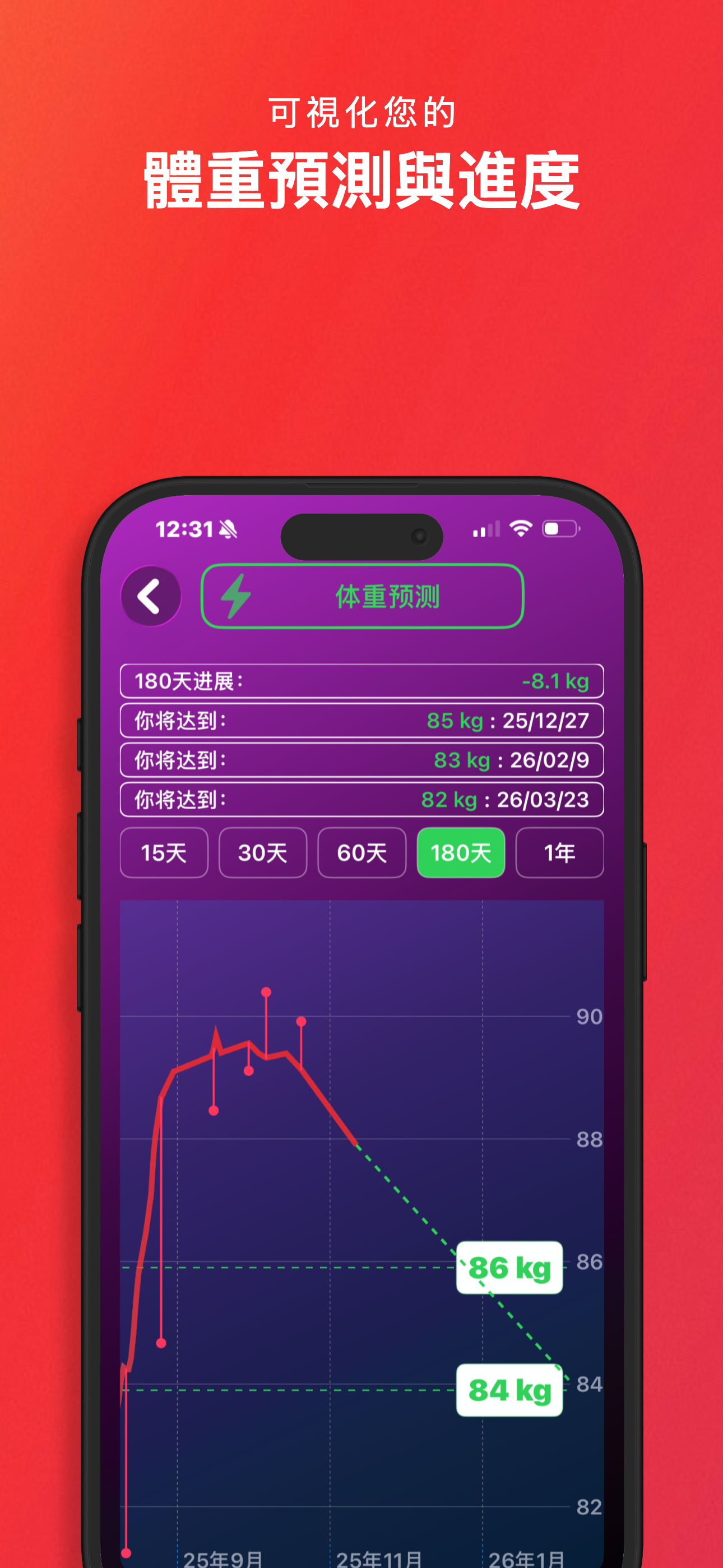
體重預測
查看里程碑日期、你的每日計劃——以及你是否在為夏季身材而努力
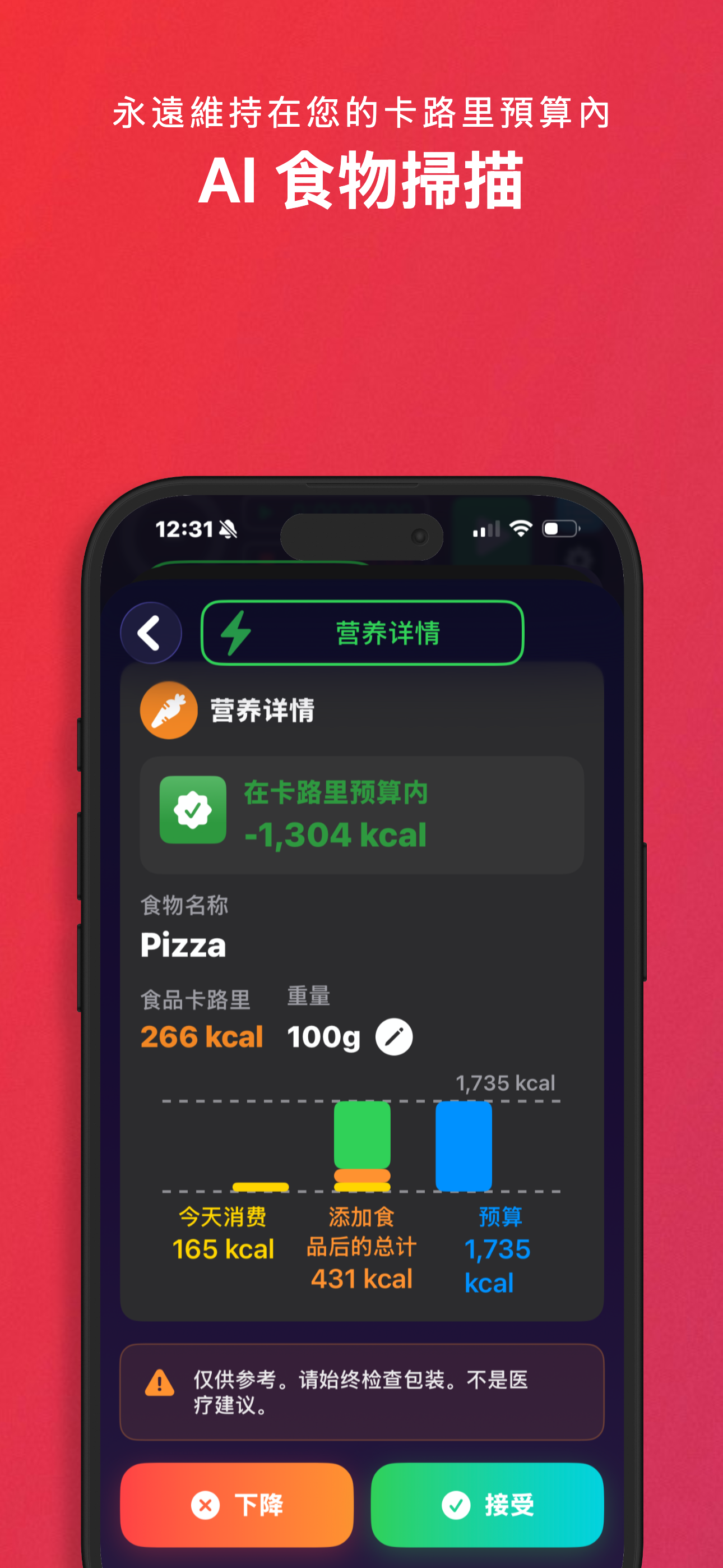
AI 食物掃描器
拍照並獲得即時卡路里估算
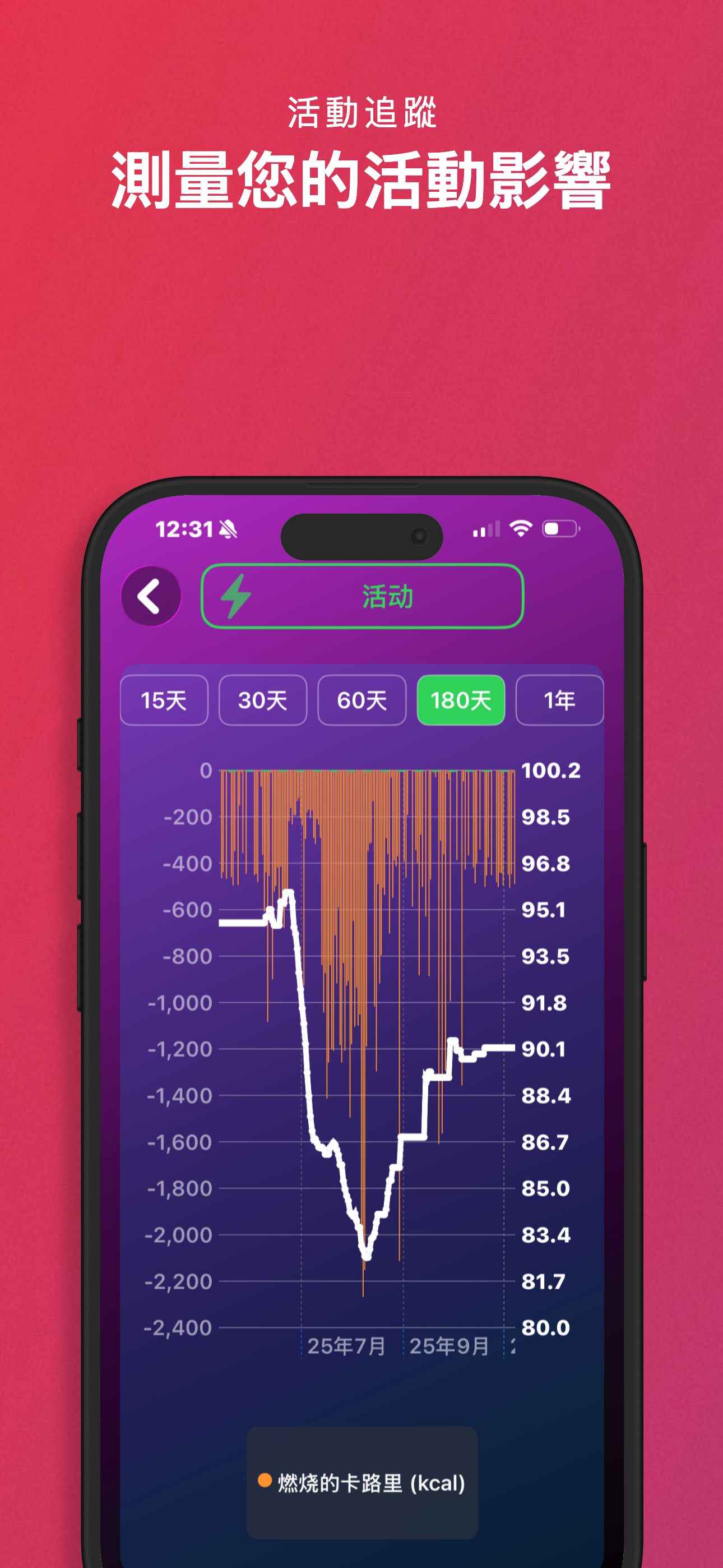
運動日誌
查看燃燒的卡路里及其意義
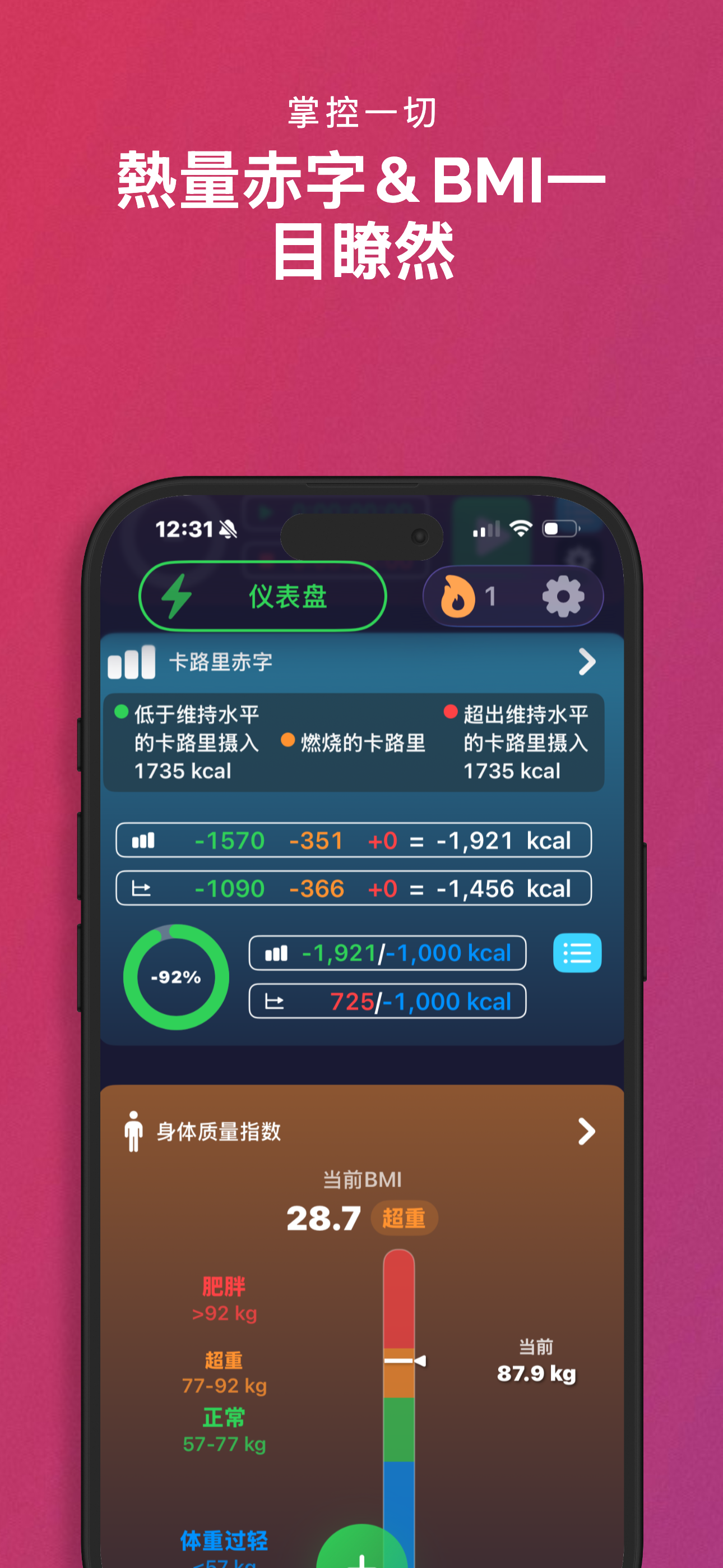
卡路里赤字
查看你距離目標的距離——以及背後的真正原因
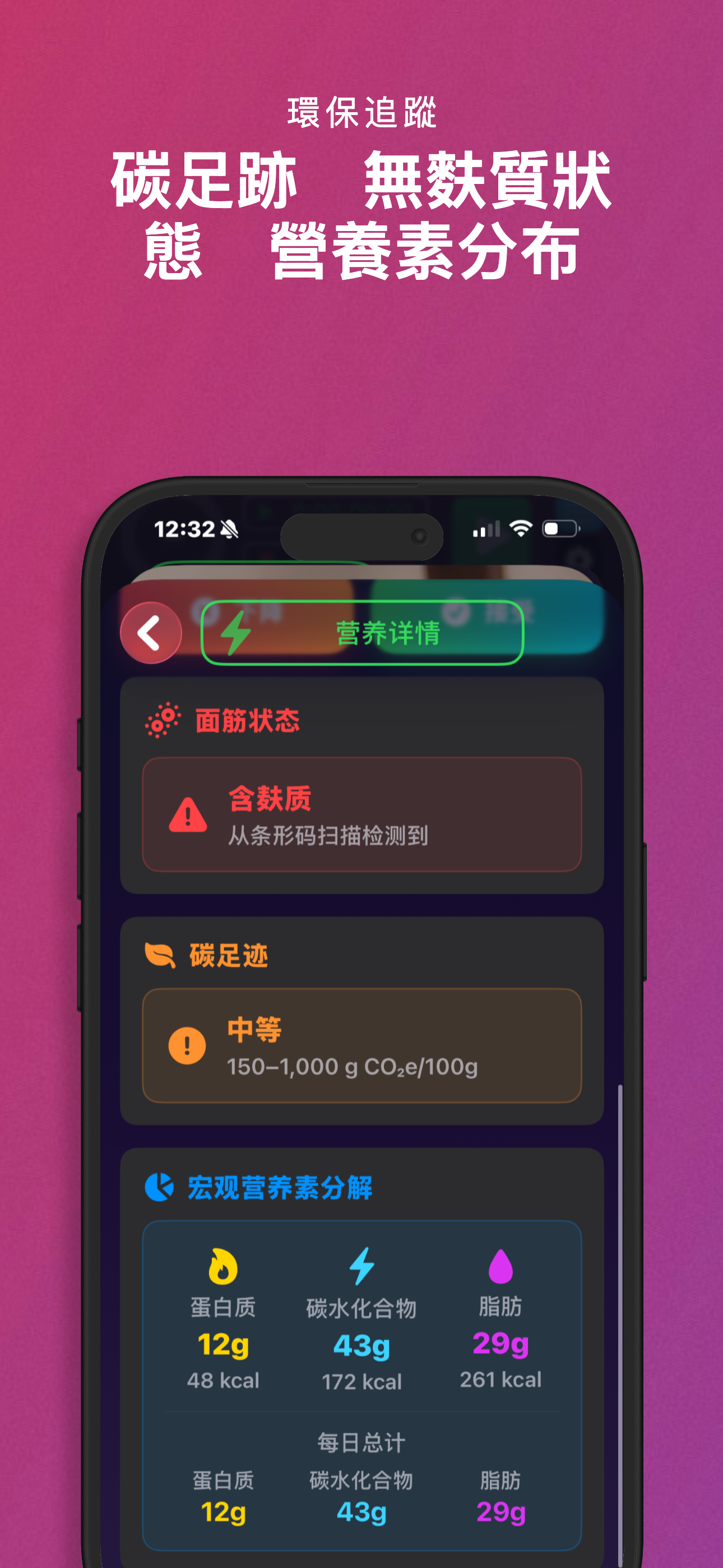
減少你的碳足跡
在減重的同時追蹤和減少你飲食選擇的二氧化碳排放
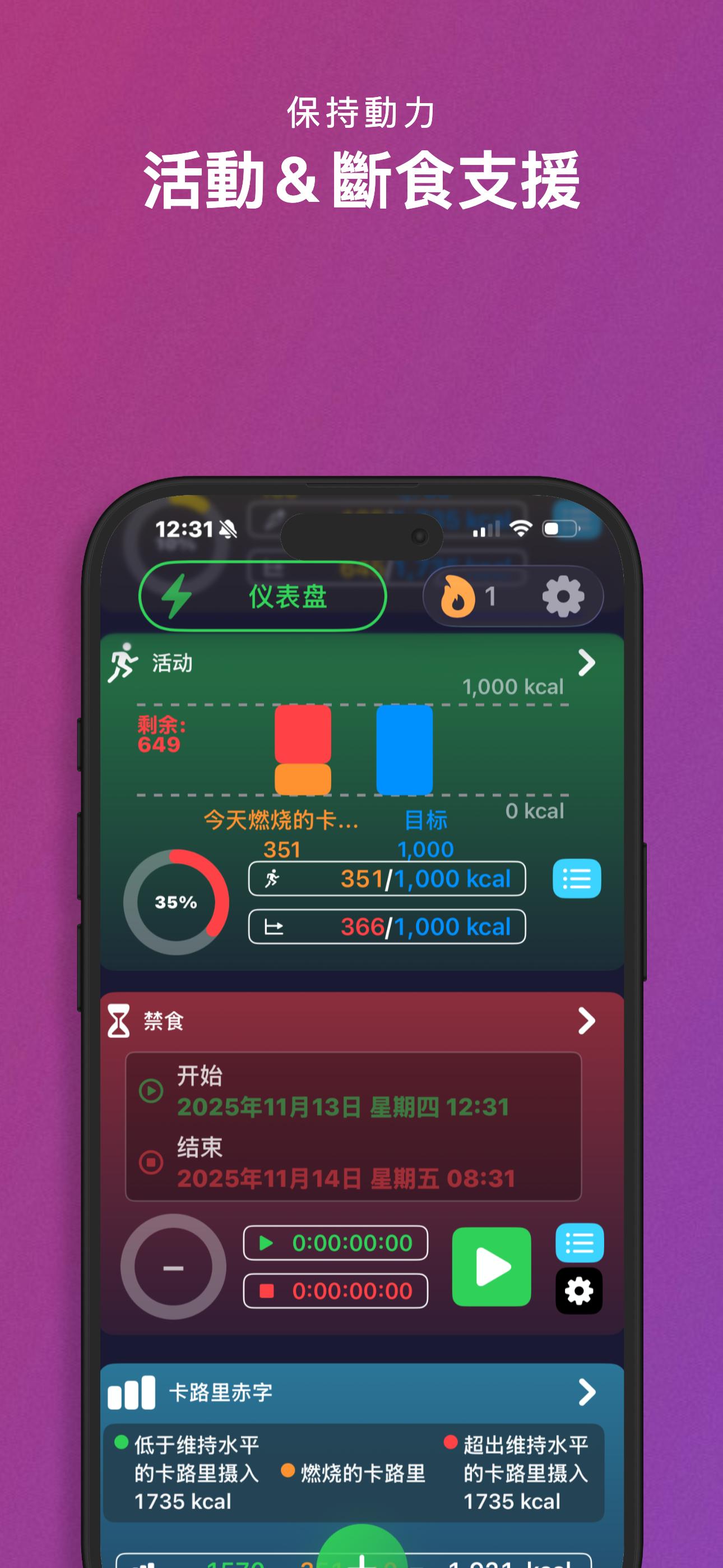
可視化禁食影響
可視化禁食窗口——及其對你體重的直接影響
功能
科學支持的可持續體重管理功能
查看您目標體重的 AI 生成照片
AI 根據照片評分您的肌肉群並顯示您的排名
根據近期數據和目標,使用自動縮放圖表預測您的體重趨勢
預算基礎的卡路里追蹤 - 簡單的「支出 vs. 預算」方法
拍照後,立即獲得卡路里估算,每天可掃描50次。
掃描條碼以獲得精確的即時卡路里估算和麩質狀態
可視化禁食窗口——及其對你體重的直接影響
查看每日赤字/盈餘與您的目標之間的視覺圖表
追蹤您飲食選擇的環境影響 (CO₂e)
基於條碼掃描和餐點分析的麩質指標
同步你的健身追蹤器。根據運動強度可視化體重影響。沒有追蹤器?我們的「添加活動」功能涵蓋45種以上的運動
動畫百分比到目標的指示器 + 獨家自動縮放的體重圖表,顯示進度和里程碑達成時間。
科學支持
Peer-reviewed references supporting weight forecasting, energy balance, carbon footprint of diets, gluten detection, nutrition databases, and AI food analysis.
Weight forecasting uses predictive models based on energy balance principles to project future weight trends from recent data. Research shows that self-monitoring of weight and calorie intake, combined with trend smoothing to reduce day-to-day noise, helps people understand their trajectory and make timely adjustments. Short-horizon predictive modeling turns your recent trajectory into actionable forecasts that support adherence and long-term habits.
Obesity (Silver Spring, Md.) · 2025
Demonstrates the importance of accurate body composition measurement in tracking weight changes, supporting the need for trend smoothing in weight forecasting models.
Annals of behavioral medicine : a publication of the Society of Behavioral Medicine · 2025
Shows how self-monitoring and feedback mechanisms support long-term weight maintenance, validating the approach of providing clear forecasts and trend visualization.
Pre-set calorie budgets with clear "within budget" or "over budget" feedback help users make informed food choices in real-time. Research demonstrates that this decision-support approach improves adherence to calorie goals by reducing cognitive load and providing immediate, actionable feedback. The simple "spend vs. budget" framework aligns with behavioral economics principles that show people make better decisions when they have clear constraints and instant feedback on their choices.
Annals of behavioral medicine : a publication of the Society of Behavioral Medicine · 2025
Shows that structured goal-setting and feedback mechanisms improve adherence to dietary targets, supporting the budget-based calorie approach.
Nature medicine · 2023
Demonstrates that structured calorie management approaches improve adherence and outcomes compared to standard care.
Energy balance—the relationship between calories consumed and calories burned—is the primary driver of weight change. Research consistently shows that creating a calorie deficit leads to weight loss, while a surplus leads to weight gain. Visualizing this deficit in real-time helps users understand how their daily choices impact their progress toward goals. The app translates energy balance into plain language, showing the gap between current intake and target, and what changes can close that gap.
Obesity (Silver Spring, Md.) · 2025
Confirms that energy balance is the fundamental mechanism driving weight change, validating the calorie deficit approach.
Nutrients · 2022
Shows that calorie deficit, regardless of timing, drives weight loss, supporting the energy balance principle.
Artificial intelligence and machine learning enable automated food recognition from photos, text descriptions, and barcode scanning. Research shows that AI-powered nutrition estimation can provide reasonable accuracy for common foods, helping users log meals more quickly and consistently. The combination of photo analysis, barcode scanning, and text parsing creates multiple pathways for food logging, reducing barriers to self-monitoring and improving adherence to calorie tracking.
Communications medicine · 2025
Demonstrates how AI and large language models can accurately estimate nutrition from food images and descriptions.
Journal of imaging · 2025
Shows that AI can extract nutrition information from food labels, supporting barcode and text-based food logging.
Food production accounts for a significant portion of global greenhouse gas emissions. Research shows that different foods have vastly different carbon footprints, and dietary choices can substantially impact environmental sustainability. Tracking the carbon footprint of meals helps users understand the environmental impact of their food choices and make more sustainable decisions. Studies demonstrate that even small dietary changes can meaningfully reduce carbon emissions.
The American journal of clinical nutrition · 2025
Shows that sustainable dietary patterns can reduce greenhouse gas emissions while improving diet quality, validating carbon footprint tracking.
The American journal of clinical nutrition · 2025
Demonstrates the relationship between diet quality and environmental sustainability, supporting carbon footprint awareness in food choices.
For people with celiac disease or gluten sensitivity, avoiding gluten is essential for health. Research shows that even small amounts of gluten can cause symptoms and long-term damage in sensitive individuals. Barcode scanning and food analysis can help identify gluten-containing products, providing quick screening to support gluten-free dietary adherence. While the app provides indicators based on product information, it's important to note that it's an estimator and not a replacement for careful label reading or medical guidance.
Nutrients · 2024
Reviews diagnostic methods for celiac disease, highlighting the importance of accurate gluten detection for those with celiac disease.
Food chemistry · 2024
Reviews technological approaches to gluten detection in foods, supporting the use of food analysis for gluten screening.
透過預算控制卡路里和激勵圖表來追蹤你的體重