AI
AI Körpervorschau
Sieh ein AI-generiertes Foto von deinem Körper bei deinem Zielgewicht
🎉 De erste Gewichtsverfolgungs-App in Low German!
Wissenschaftlich gestützte Gewichtskontrolle & Prognose mit KI-Lebensmittelscanning für Kalorien, CO2-Fußabdruck und Glutenwarnungen über den Barcode; plus Kalorienbudgets und Kaloriendefizit.
Funktionen
Wisch durch Screenshots vun de App
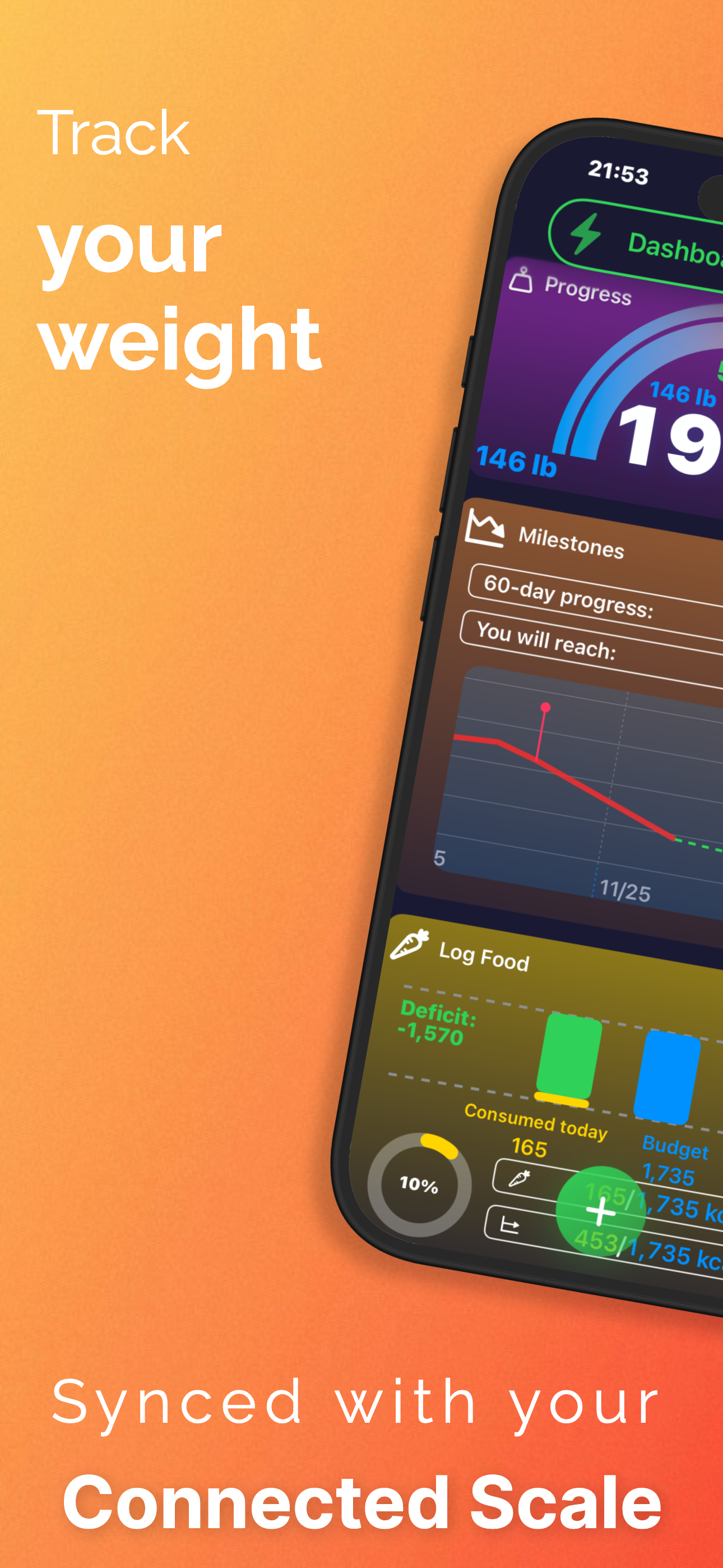
Dien Gewichtsverlornreise
Visualisiere dien Fortschritt von Start bis Zielgewicht
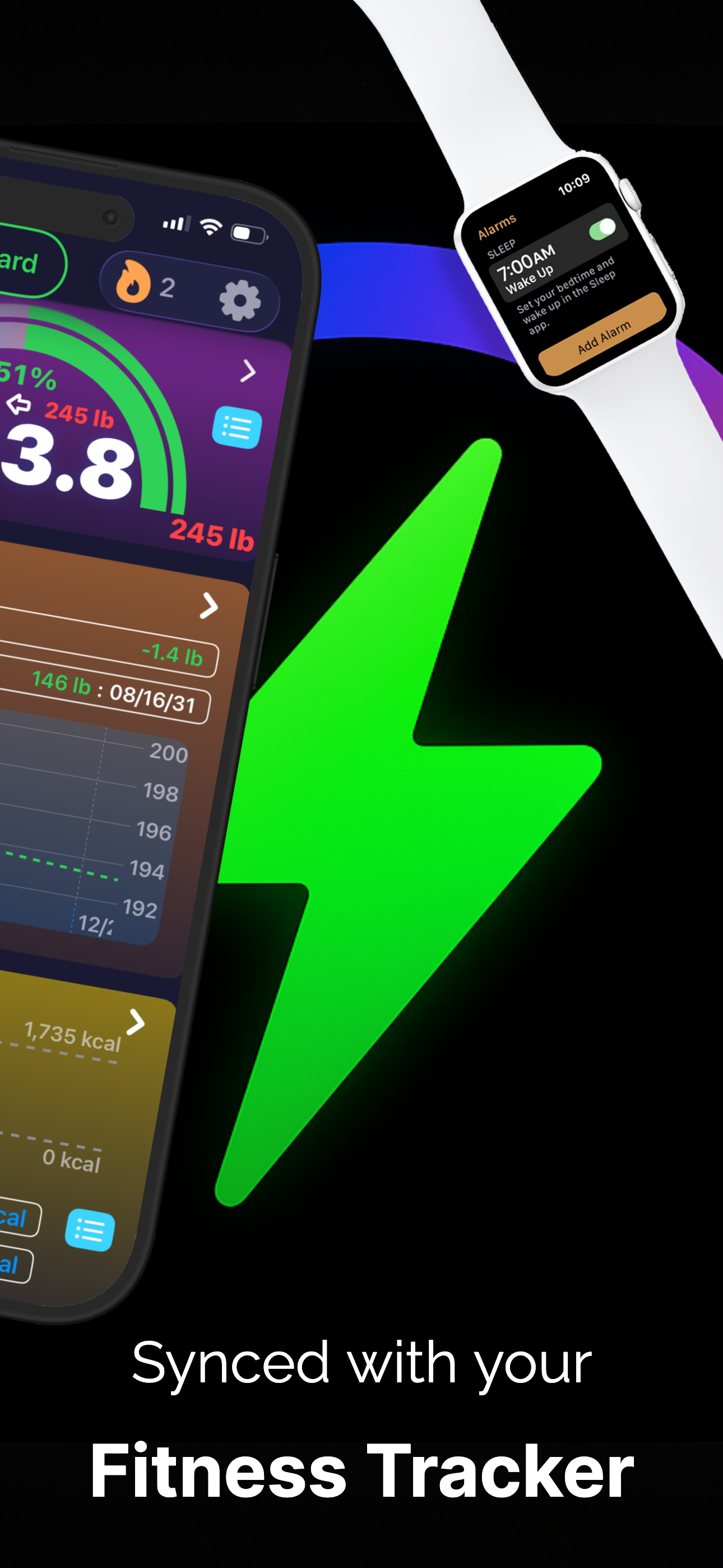
Apple Health Integration
Synchronisiere dien Fitness-Tracker. Visualisiere den Einfluss von Training auf dien Gewicht. Kein Tracker? Unser 'Aktivität hinzufügen'-Feature deckt 45+ Sportarten ab
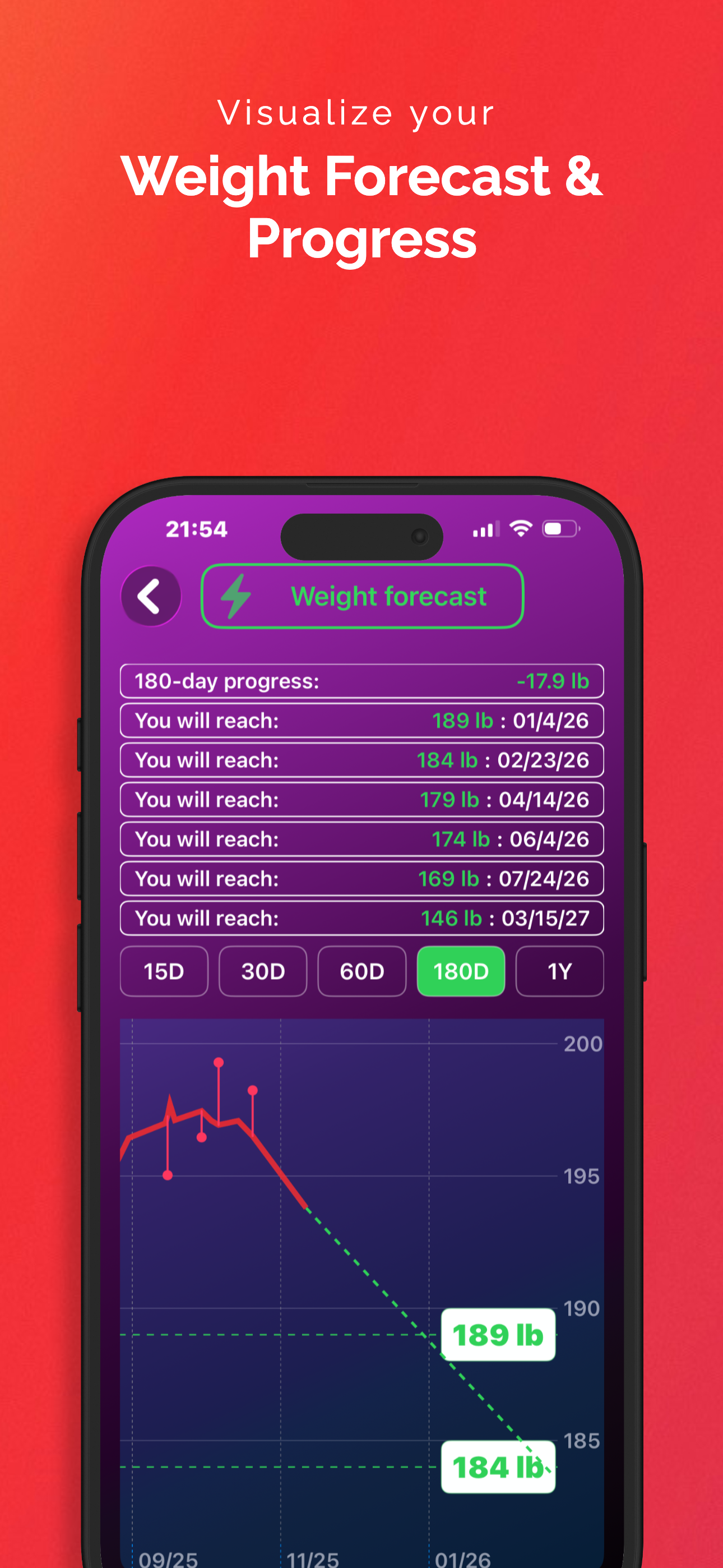
Gewichtsvorhersage
Sieh Meilensteindaten, dien täglichen Plan — un ob du auf dem richtigen Weg für dien Sommerkörper bist
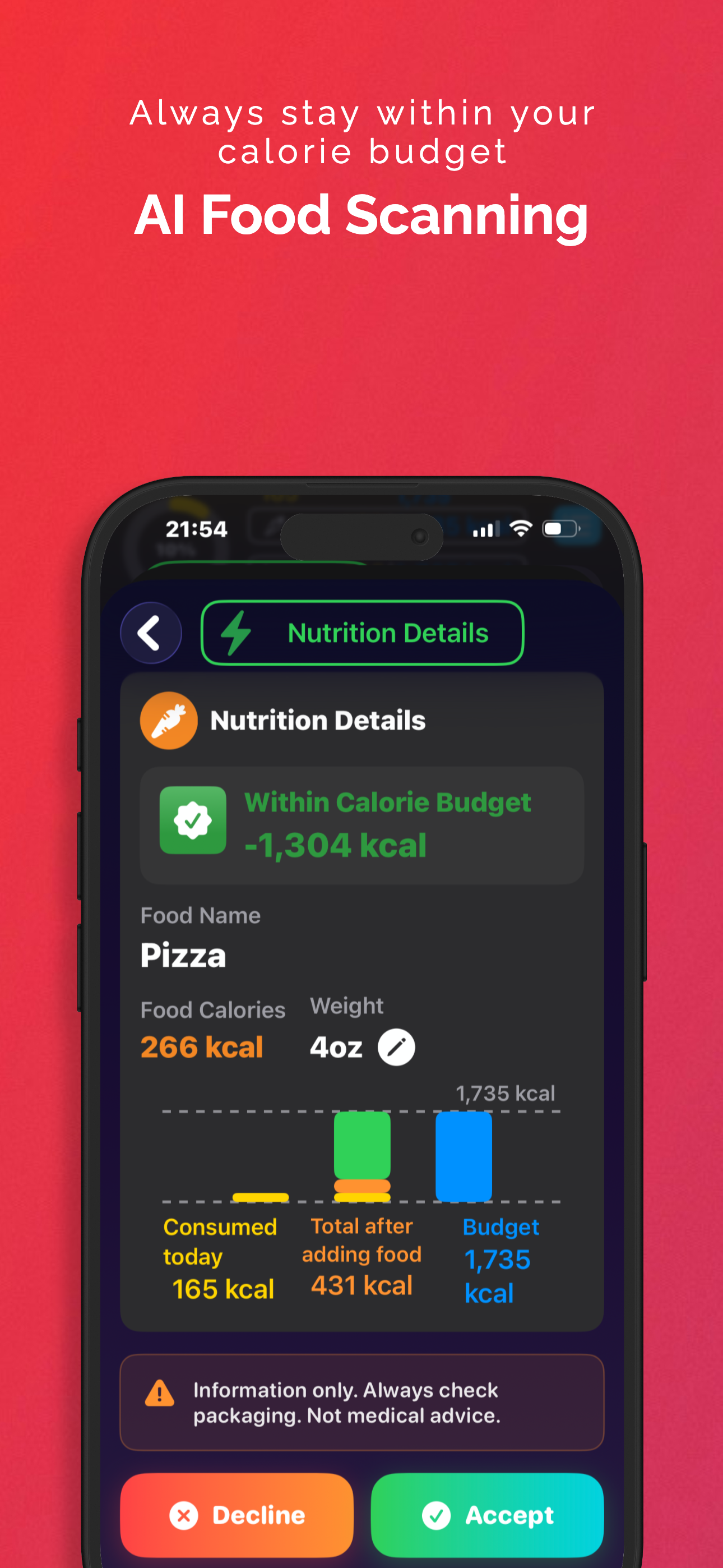
AI Food Scanner
Mach ein Foto un erhalte sofortige Kalorienabschätzungen
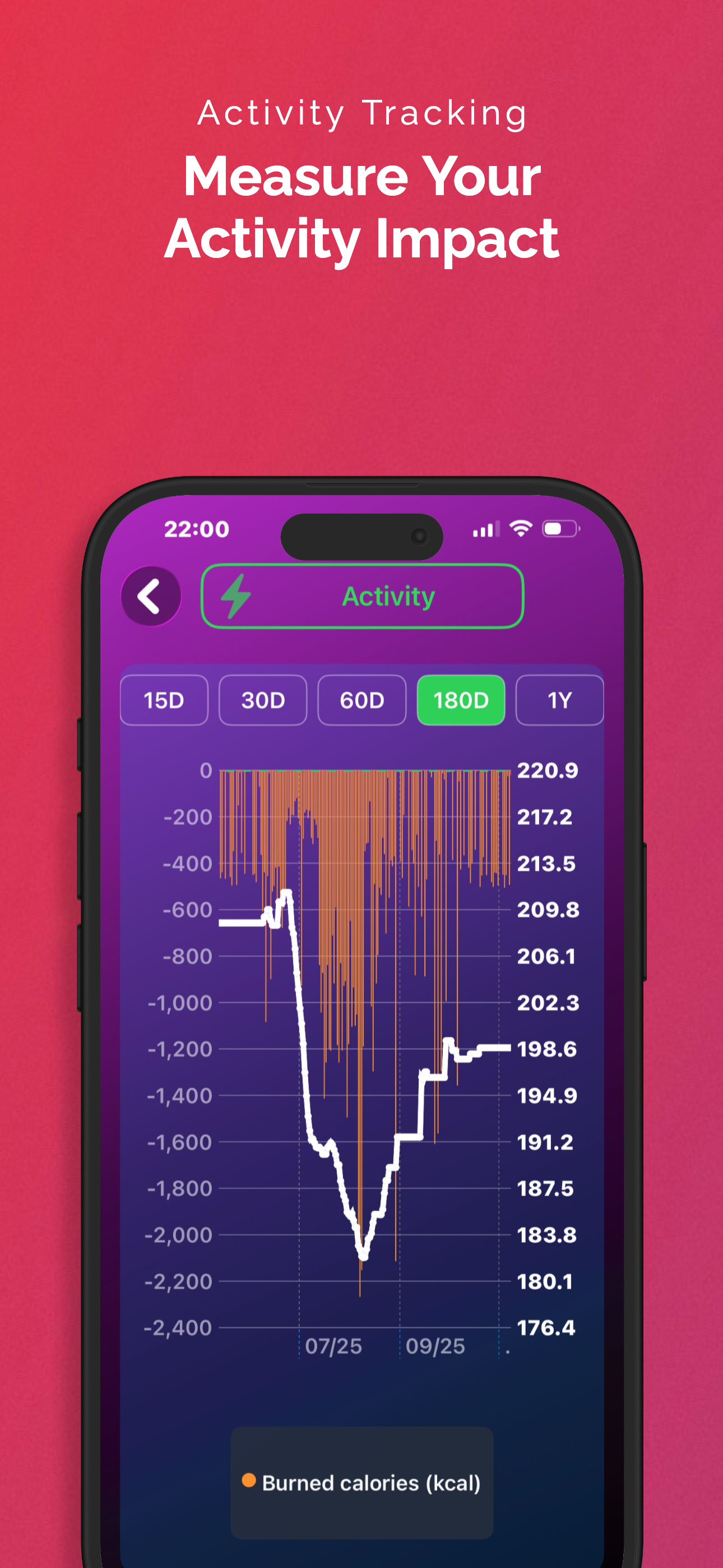
Übungsprotokoll
Sieh dir die verbrannten Kalorien an und was sie bedeuten
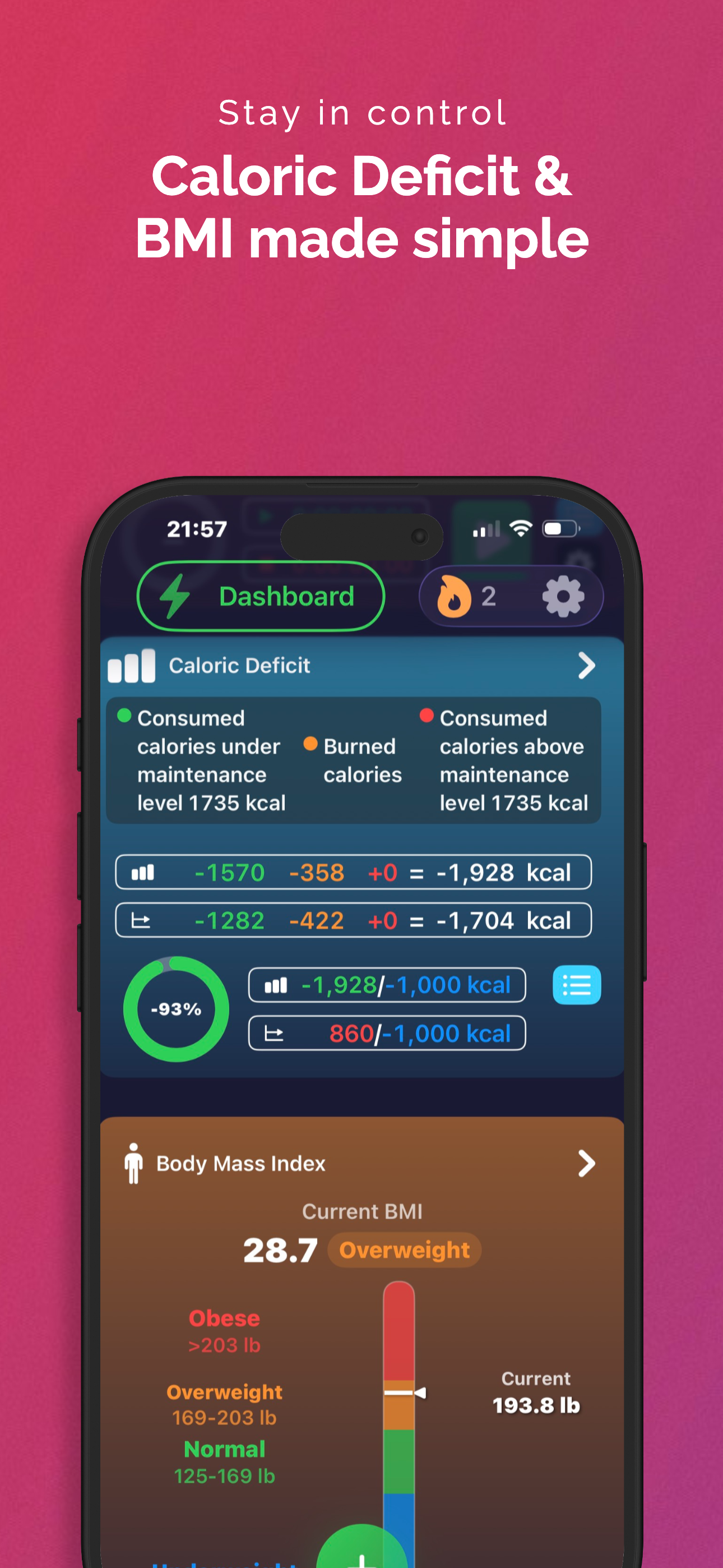
Kalorienmangel
Sieh wie weit du vom Ziel entfernt bist — un die echten Gründe dafür
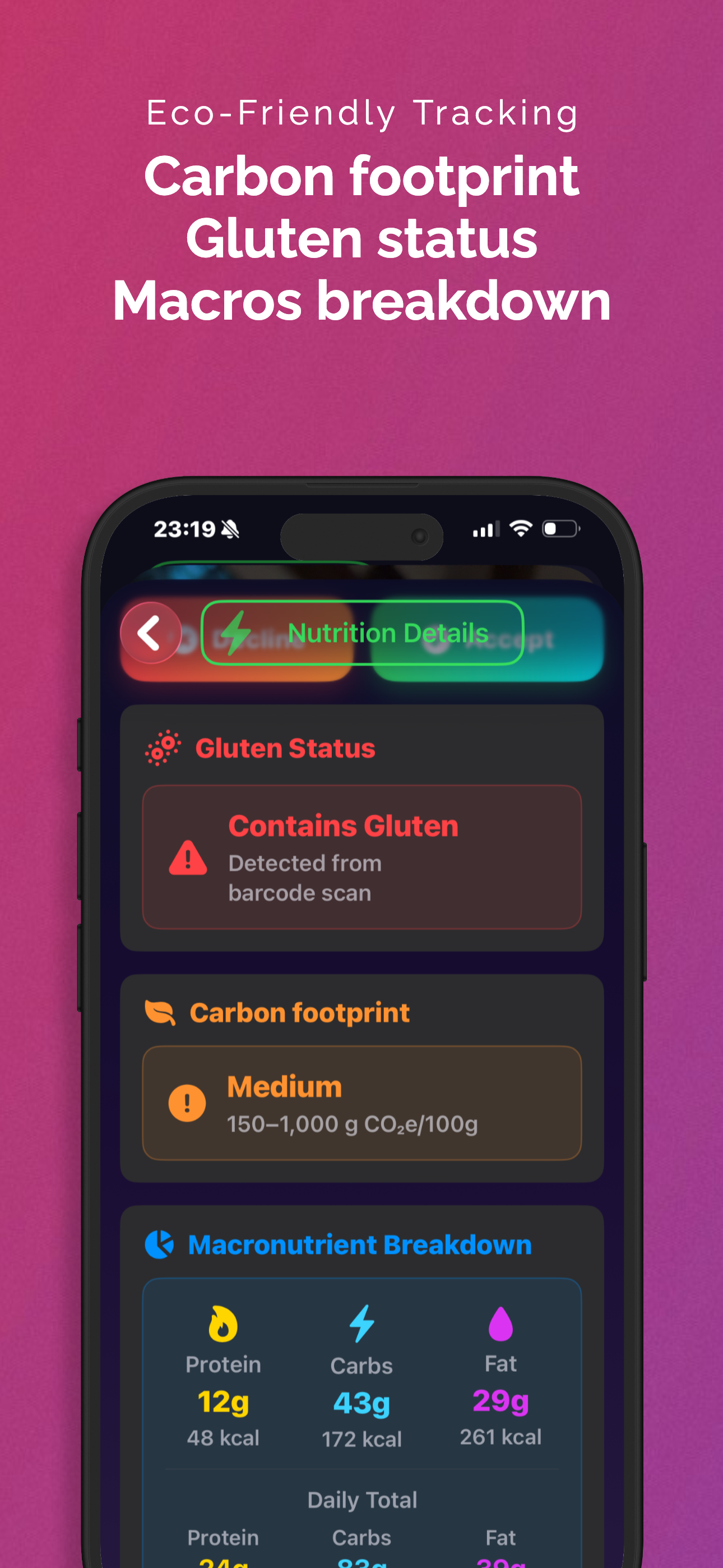
Reduziere dien CO2-Fußabdruck
Track un reduziere CO2-Emissionen von dien Lebensmittelwahlen, während du Gewich verlorn
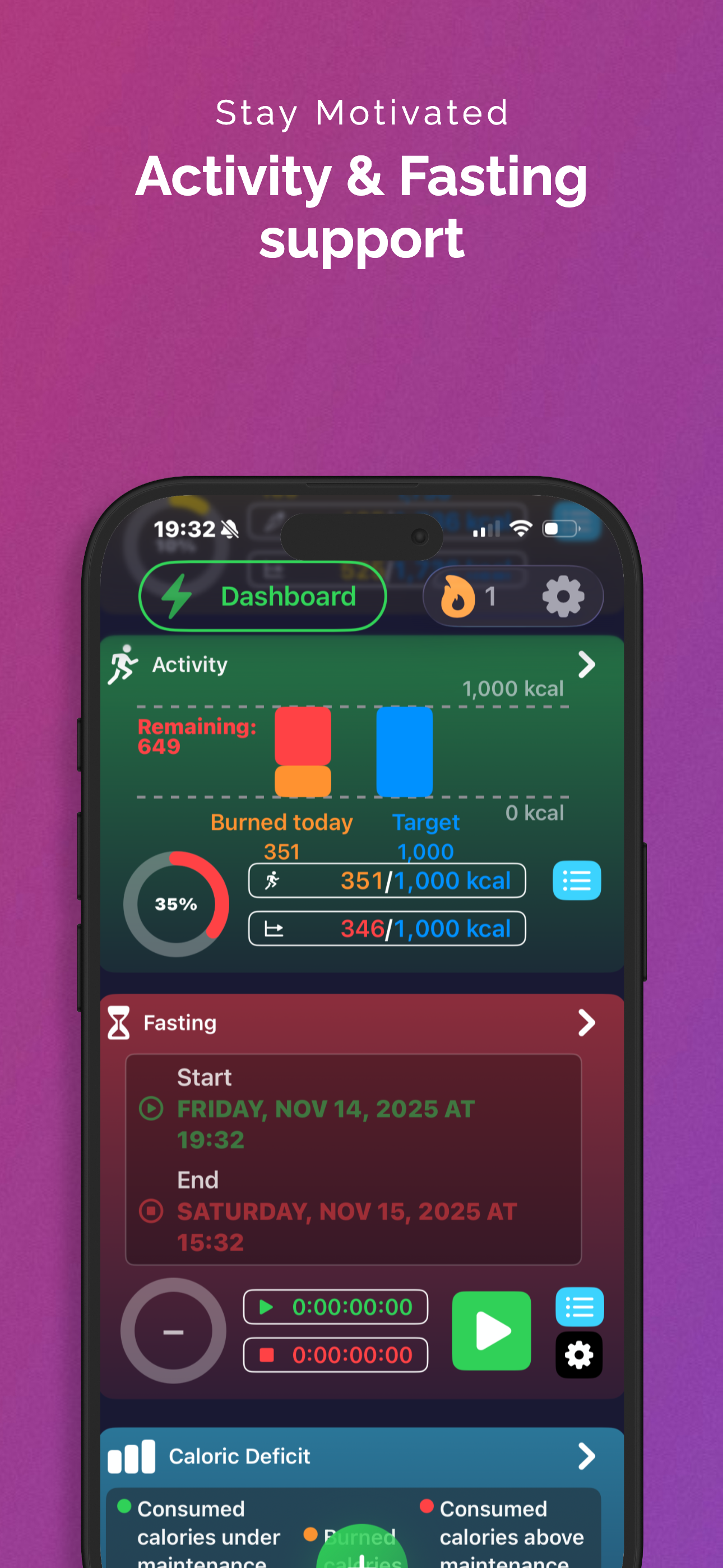
Fasting-Einfluss visualisieren
Visualisiere Fastenfenster — un deren direkten Einfluss auf dien Gewicht
Funktionen
Wissenschaftlich untermauerte Funktionen för nachhaltige Gewichtsregulierung
Sieh ein AI-generiertes Foto von deinem Körper bei deinem Zielgewicht
AI bewertet deine Muskelgruppen anhand eines Fotos und zeigt, wie du abschneidest
Prognostiziere deinen Gewichtstrend basierend op de neuste Daten un Ziele mit'n Auto-Zoom-Diagramm.
Budget-basierten Kalorienverfolgung - einfache 'ausgeben vs. Budget' Ansatz
Mach ein Foto, krieg sofortige Kalorienabschätzungen mit 50 Scans pro Tag.
Scanne Barcodes für präzise sofortige Kalorienabschätzungen un Glutenstatus
Visualisiere Fastenfenster — un deren direkten Einfluss auf dien Gewicht
Seh den täglichen Defizit/Überschuss im Vergleich zu deinem Ziel mit visuellen Diagrammen.
Halt den Umwelteinfluss (CO₂e) von diener Essenswahl fest
Glutenindikatoren basierend auf Barcode-Scannen und Mahlzeitenanalyse
Synchronisiere dien Fitness-Tracker. Visualisiere den Einfluss von Training auf dien Gewicht. Kein Tracker? Unser 'Aktivität hinzufügen'-Feature deckt 45+ Sportarten ab
Animierte %-zu-Ziel-Anzeige + exklusive Auto-Zoom-Gewichtskurve mit Vorhersage — sieh Fortschritt un wann Meilensteine erreicht werden.
Wissenschaftlich fundiert
Peer-reviewed references supporting weight forecasting, energy balance, carbon footprint of diets, gluten detection, nutrition databases, and AI food analysis.
Weight forecasting uses predictive models based on energy balance principles to project future weight trends from recent data. Research shows that self-monitoring of weight and calorie intake, combined with trend smoothing to reduce day-to-day noise, helps people understand their trajectory and make timely adjustments. Short-horizon predictive modeling turns your recent trajectory into actionable forecasts that support adherence and long-term habits.
Obesity (Silver Spring, Md.) · 2025
Demonstrates the importance of accurate body composition measurement in tracking weight changes, supporting the need for trend smoothing in weight forecasting models.
Annals of behavioral medicine : a publication of the Society of Behavioral Medicine · 2025
Shows how self-monitoring and feedback mechanisms support long-term weight maintenance, validating the approach of providing clear forecasts and trend visualization.
Pre-set calorie budgets with clear "within budget" or "over budget" feedback help users make informed food choices in real-time. Research demonstrates that this decision-support approach improves adherence to calorie goals by reducing cognitive load and providing immediate, actionable feedback. The simple "spend vs. budget" framework aligns with behavioral economics principles that show people make better decisions when they have clear constraints and instant feedback on their choices.
Annals of behavioral medicine : a publication of the Society of Behavioral Medicine · 2025
Shows that structured goal-setting and feedback mechanisms improve adherence to dietary targets, supporting the budget-based calorie approach.
Nature medicine · 2023
Demonstrates that structured calorie management approaches improve adherence and outcomes compared to standard care.
Energy balance—the relationship between calories consumed and calories burned—is the primary driver of weight change. Research consistently shows that creating a calorie deficit leads to weight loss, while a surplus leads to weight gain. Visualizing this deficit in real-time helps users understand how their daily choices impact their progress toward goals. The app translates energy balance into plain language, showing the gap between current intake and target, and what changes can close that gap.
Obesity (Silver Spring, Md.) · 2025
Confirms that energy balance is the fundamental mechanism driving weight change, validating the calorie deficit approach.
Nutrients · 2022
Shows that calorie deficit, regardless of timing, drives weight loss, supporting the energy balance principle.
Artificial intelligence and machine learning enable automated food recognition from photos, text descriptions, and barcode scanning. Research shows that AI-powered nutrition estimation can provide reasonable accuracy for common foods, helping users log meals more quickly and consistently. The combination of photo analysis, barcode scanning, and text parsing creates multiple pathways for food logging, reducing barriers to self-monitoring and improving adherence to calorie tracking.
Communications medicine · 2025
Demonstrates how AI and large language models can accurately estimate nutrition from food images and descriptions.
Journal of imaging · 2025
Shows that AI can extract nutrition information from food labels, supporting barcode and text-based food logging.
Food production accounts for a significant portion of global greenhouse gas emissions. Research shows that different foods have vastly different carbon footprints, and dietary choices can substantially impact environmental sustainability. Tracking the carbon footprint of meals helps users understand the environmental impact of their food choices and make more sustainable decisions. Studies demonstrate that even small dietary changes can meaningfully reduce carbon emissions.
The American journal of clinical nutrition · 2025
Shows that sustainable dietary patterns can reduce greenhouse gas emissions while improving diet quality, validating carbon footprint tracking.
The American journal of clinical nutrition · 2025
Demonstrates the relationship between diet quality and environmental sustainability, supporting carbon footprint awareness in food choices.
For people with celiac disease or gluten sensitivity, avoiding gluten is essential for health. Research shows that even small amounts of gluten can cause symptoms and long-term damage in sensitive individuals. Barcode scanning and food analysis can help identify gluten-containing products, providing quick screening to support gluten-free dietary adherence. While the app provides indicators based on product information, it's important to note that it's an estimator and not a replacement for careful label reading or medical guidance.
Nutrients · 2024
Reviews diagnostic methods for celiac disease, highlighting the importance of accurate gluten detection for those with celiac disease.
Food chemistry · 2024
Reviews technological approaches to gluten detection in foods, supporting the use of food analysis for gluten screening.
Halt dien Gewicht mit budgetbasierter Kalorienkontrolle un motivierenden Diagrammen
Lade LyteFast hüt ned un krieg dien 3-dägige kostenlose Testversion!
Herunterladen im App StoreJederzeit kündigen • 151 Språk