AI
AI Kūno Peržiūra
Peržiūrėkite AI sugeneruotą nuotrauką savo kūno esant norimam svoriui
NAUJA: AI Kūno Peržiūra sukuria tikslinę figūrą. Raumenų įvertinimas vertina 8 raumenų grupes iš nuotraukos. Taip pat svorio prognozė, kalorijų sekimas ir AI maisto skena
Funkcijos
Perbraukite per programėlės ekrano nuotraukas
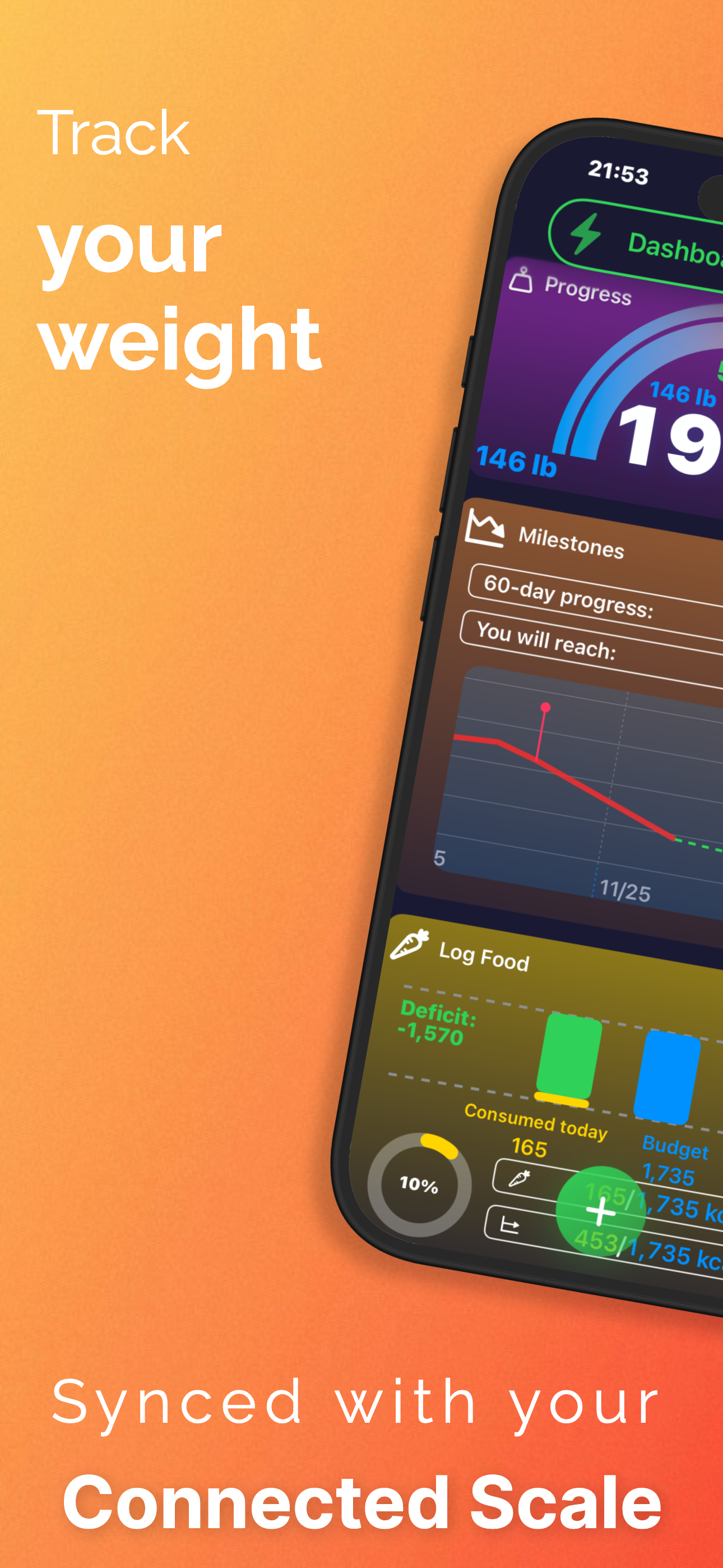
Jūsų svorio metimo kelionė
Vizualizuokite savo pažangą nuo pradžios iki tikslo svorio
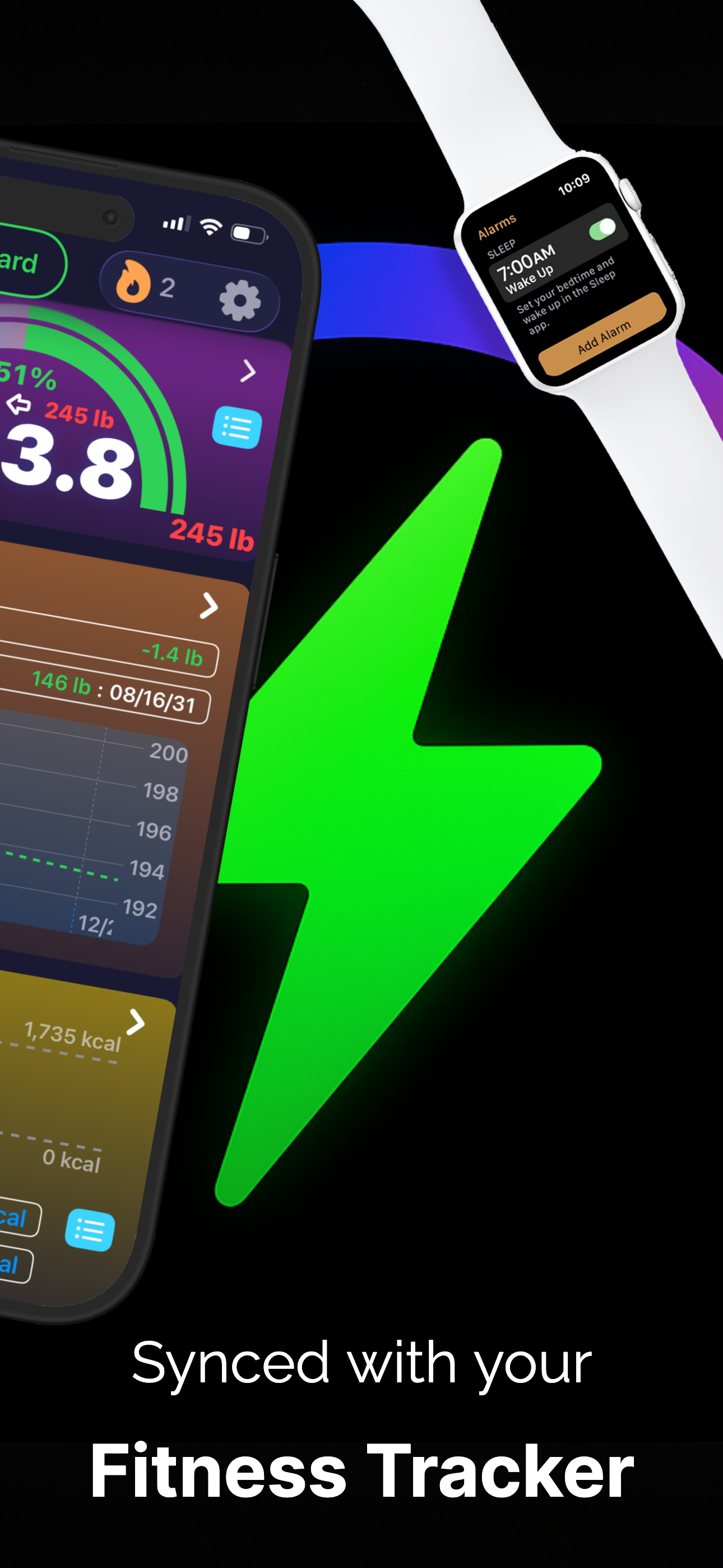
Apple Health integracija
Sinchronizuokite savo fitneso sekiklį. Vizualizuokite svorio poveikį pagal treniruotės intensyvumą. Neturite sekiklio? Mūsų 'Pridėti veiklą' funkcija apima daugiau nei 45 sporto šakas
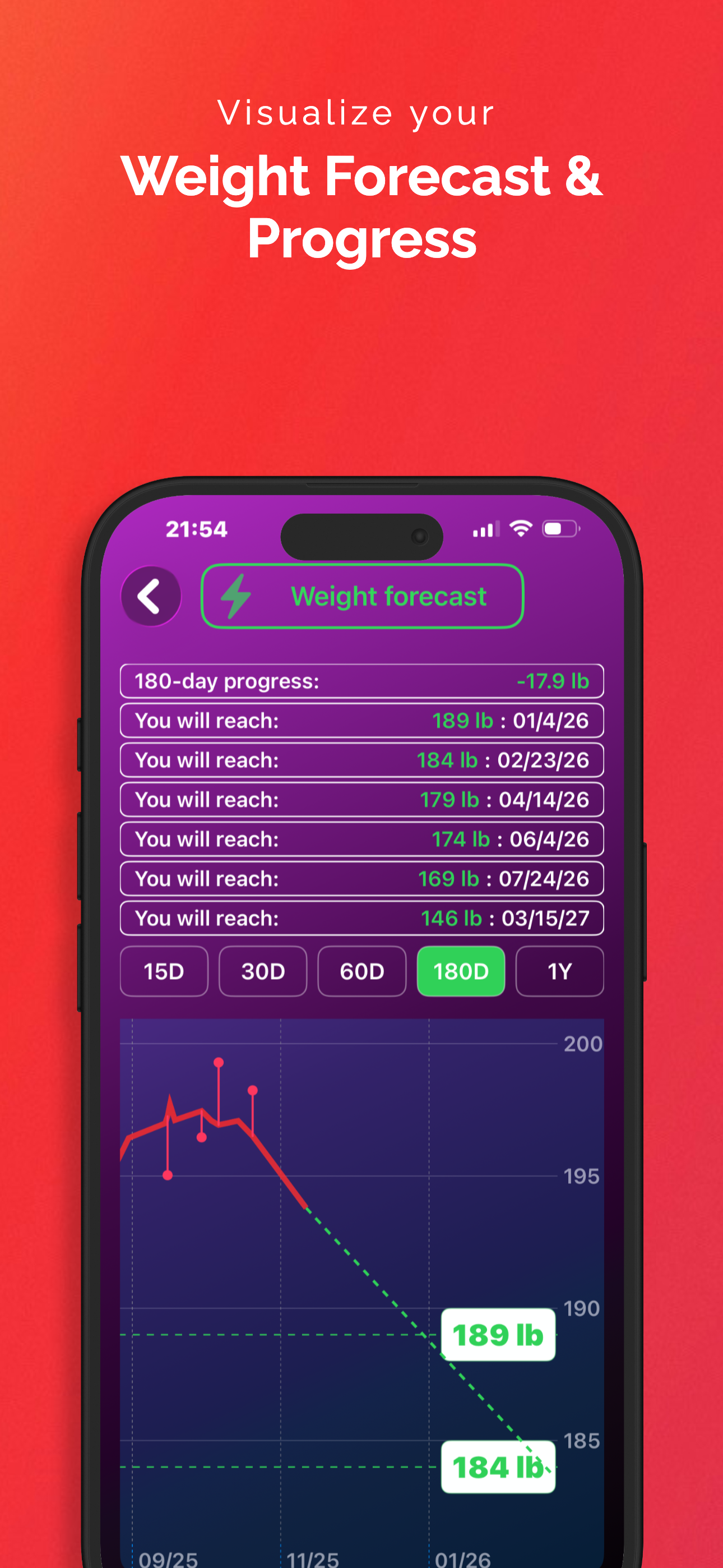
Svorio prognozė
Peržiūrėkite svarbius datų momentus, savo kasdienį planą — ir ar esate kelyje link vasaros kūno
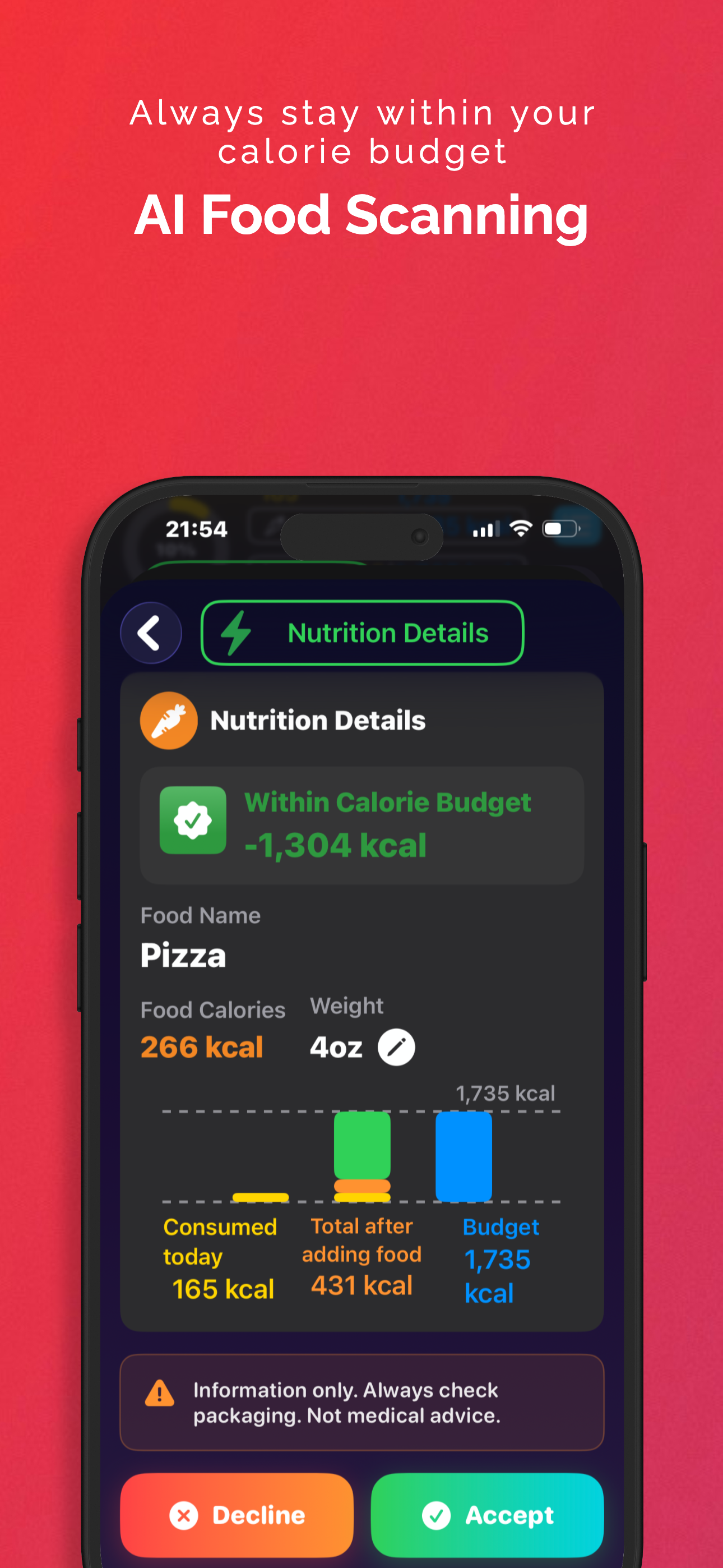
AI Maisto Skaitytuvas
Nufotografuokite ir gaukite momentinius kalorijų įvertinimus
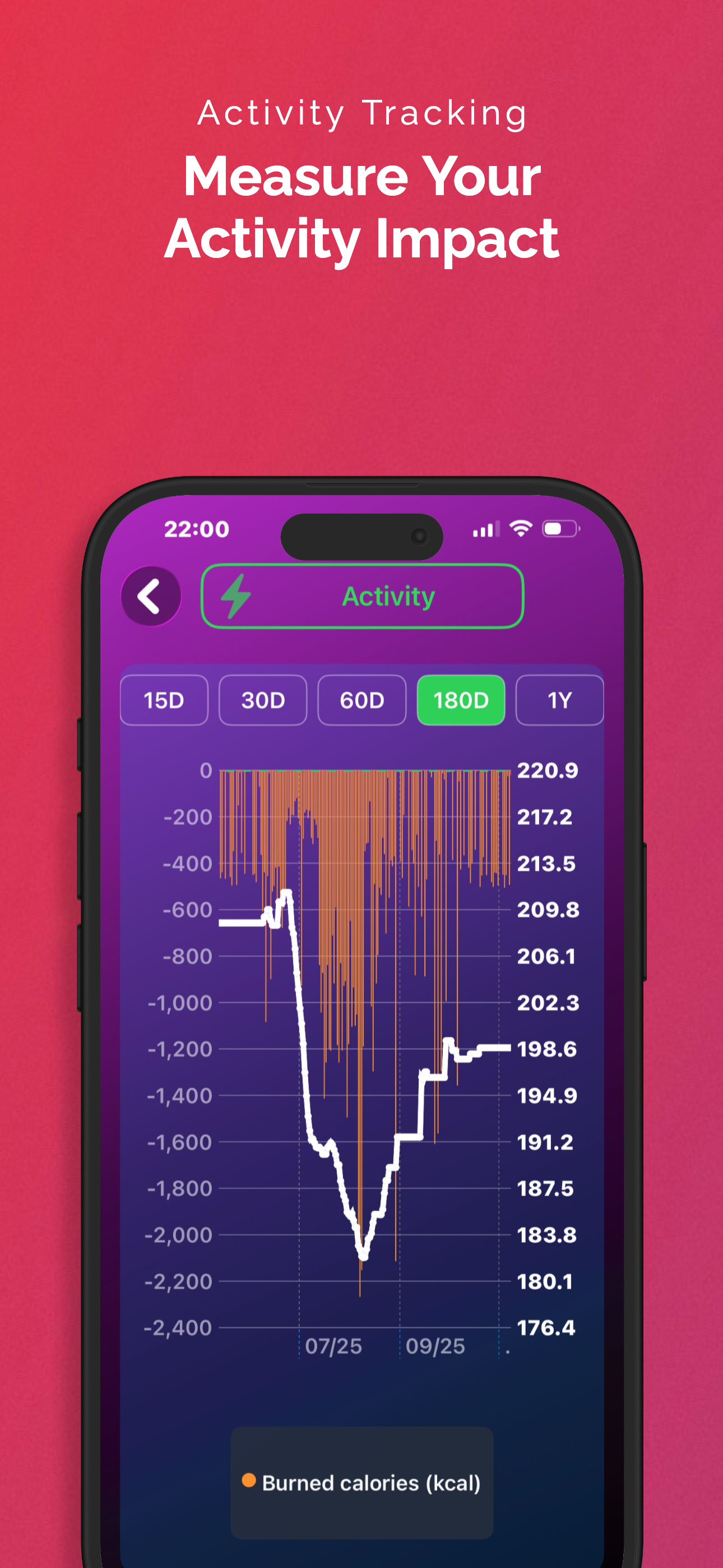
Pratimų žurnalas
Matykite sudegintas kalorijas ir ką jos reiškia
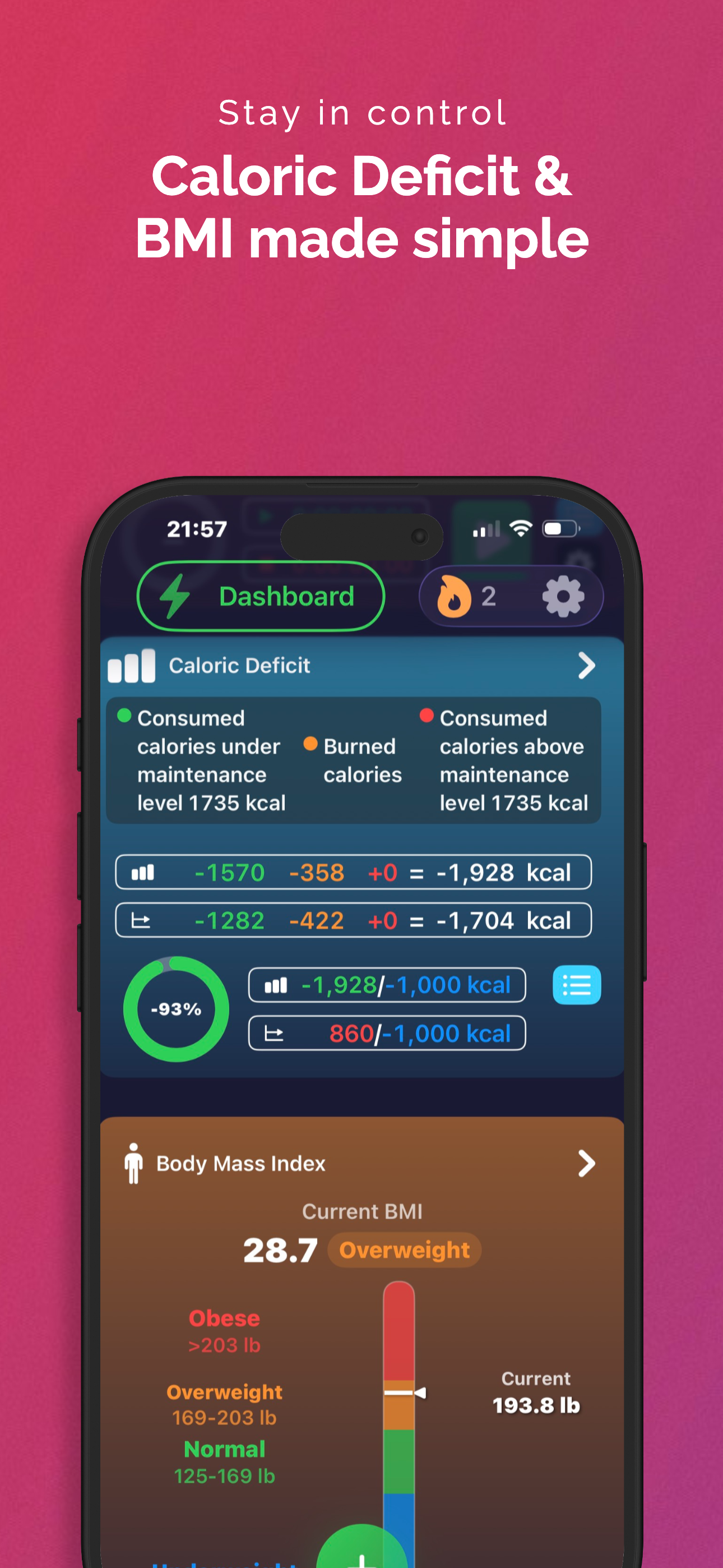
Kalorijų deficitas
Pamatykite, kiek toli esate nuo tikslo — ir tikrąsias priežastis už to
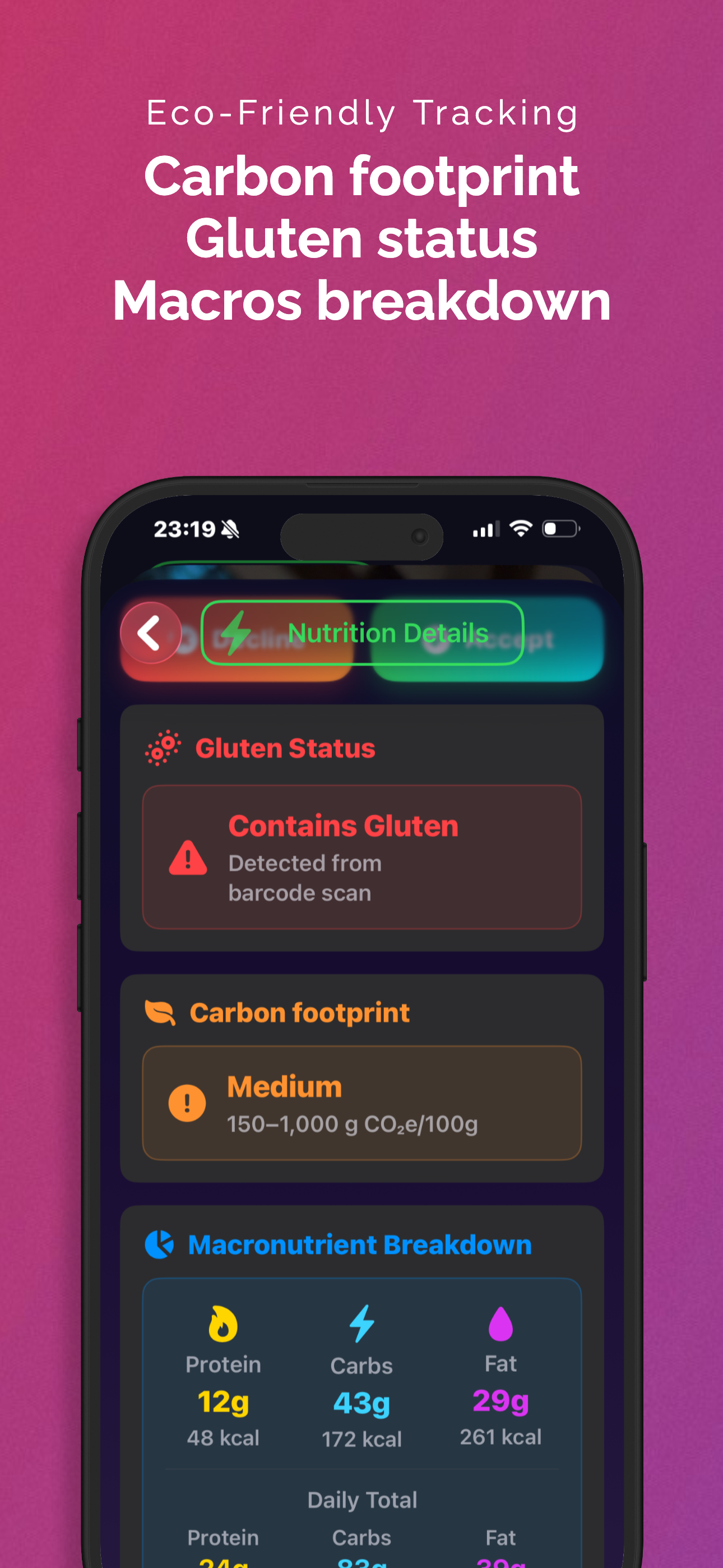
Sumažinkite savo anglies pėdsaką
Sekite ir mažinkite CO2 emisijas iš savo maisto pasirinkimų, kol metate svorį
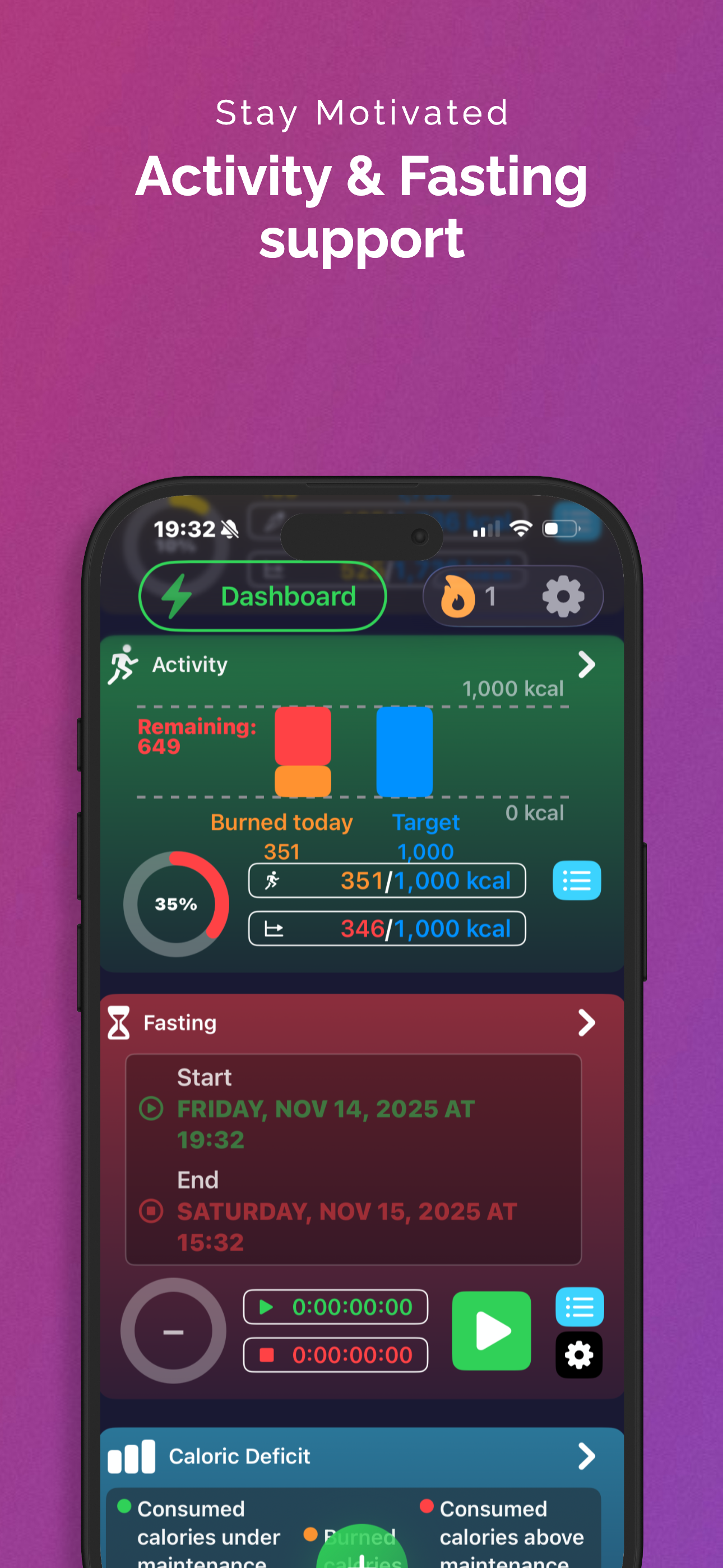
Vizualizuokite pasninko poveikį
Vizualizuokite pasninko langus — ir jų tiesioginį poveikį jūsų svoriui
Funkcijos
Mokslo pagrindu paremtos funkcijos tvariam svorio valdymui
Peržiūrėkite AI sugeneruotą nuotrauką savo kūno esant norimam svoriui
AI įvertina jūsų raumenų grupes pagal nuotrauką ir rodo, kaip jūs vertinami
Prognozuokite savo svorio tendenciją remiantis naujausiais duomenimis ir tikslais su Auto-Zoom diagrama.
Biudžeto pagrindu veikiantis kalorijų sekimas - paprastas 'išlaidos vs. biudžetas' požiūris
Nufotografuokite, gaukite momentinius kalorijų įvertinimus su 50 nuskaitymų per dieną.
Skaitykite brūkšninius kodus, kad gautumėte tikslius momentinius kalorijų įvertinimus ir glitimo būseną
Vizualizuokite pasninko langus — ir jų tiesioginį poveikį jūsų svoriui
Peržiūrėkite dienos deficitą/pertekliaus rodiklius, palyginti su savo tikslu, naudodami vizualinius grafikus.
Sekite maisto pasirinkimų poveikį aplinkai (CO₂e)
Glitimo indikatoriai, pagrįsti brūkšninių kodų nuskaitymu ir valgio analize
Sinchronizuokite savo fitneso sekiklį. Vizualizuokite svorio poveikį pagal treniruotės intensyvumą. Neturite sekiklio? Mūsų 'Pridėti veiklą' funkcija apima daugiau nei 45 sporto šakas
Animuotas %-iki-tikslo matuoklis + išskirtinis Auto-Zoom svorio grafikas su prognozėmis — stebėkite pažangą ir kada pasiekiami svarbūs momentai.
Moksliniais įrodymais pagrįsta
Peer-reviewed references supporting weight forecasting, energy balance, carbon footprint of diets, gluten detection, nutrition databases, and AI food analysis.
Weight forecasting uses predictive models based on energy balance principles to project future weight trends from recent data. Research shows that self-monitoring of weight and calorie intake, combined with trend smoothing to reduce day-to-day noise, helps people understand their trajectory and make timely adjustments. Short-horizon predictive modeling turns your recent trajectory into actionable forecasts that support adherence and long-term habits.
Obesity (Silver Spring, Md.) · 2025
Demonstrates the importance of accurate body composition measurement in tracking weight changes, supporting the need for trend smoothing in weight forecasting models.
Annals of behavioral medicine : a publication of the Society of Behavioral Medicine · 2025
Shows how self-monitoring and feedback mechanisms support long-term weight maintenance, validating the approach of providing clear forecasts and trend visualization.
Pre-set calorie budgets with clear "within budget" or "over budget" feedback help users make informed food choices in real-time. Research demonstrates that this decision-support approach improves adherence to calorie goals by reducing cognitive load and providing immediate, actionable feedback. The simple "spend vs. budget" framework aligns with behavioral economics principles that show people make better decisions when they have clear constraints and instant feedback on their choices.
Annals of behavioral medicine : a publication of the Society of Behavioral Medicine · 2025
Shows that structured goal-setting and feedback mechanisms improve adherence to dietary targets, supporting the budget-based calorie approach.
Nature medicine · 2023
Demonstrates that structured calorie management approaches improve adherence and outcomes compared to standard care.
Energy balance—the relationship between calories consumed and calories burned—is the primary driver of weight change. Research consistently shows that creating a calorie deficit leads to weight loss, while a surplus leads to weight gain. Visualizing this deficit in real-time helps users understand how their daily choices impact their progress toward goals. The app translates energy balance into plain language, showing the gap between current intake and target, and what changes can close that gap.
Obesity (Silver Spring, Md.) · 2025
Confirms that energy balance is the fundamental mechanism driving weight change, validating the calorie deficit approach.
Nutrients · 2022
Shows that calorie deficit, regardless of timing, drives weight loss, supporting the energy balance principle.
Artificial intelligence and machine learning enable automated food recognition from photos, text descriptions, and barcode scanning. Research shows that AI-powered nutrition estimation can provide reasonable accuracy for common foods, helping users log meals more quickly and consistently. The combination of photo analysis, barcode scanning, and text parsing creates multiple pathways for food logging, reducing barriers to self-monitoring and improving adherence to calorie tracking.
Communications medicine · 2025
Demonstrates how AI and large language models can accurately estimate nutrition from food images and descriptions.
Journal of imaging · 2025
Shows that AI can extract nutrition information from food labels, supporting barcode and text-based food logging.
Food production accounts for a significant portion of global greenhouse gas emissions. Research shows that different foods have vastly different carbon footprints, and dietary choices can substantially impact environmental sustainability. Tracking the carbon footprint of meals helps users understand the environmental impact of their food choices and make more sustainable decisions. Studies demonstrate that even small dietary changes can meaningfully reduce carbon emissions.
The American journal of clinical nutrition · 2025
Shows that sustainable dietary patterns can reduce greenhouse gas emissions while improving diet quality, validating carbon footprint tracking.
The American journal of clinical nutrition · 2025
Demonstrates the relationship between diet quality and environmental sustainability, supporting carbon footprint awareness in food choices.
For people with celiac disease or gluten sensitivity, avoiding gluten is essential for health. Research shows that even small amounts of gluten can cause symptoms and long-term damage in sensitive individuals. Barcode scanning and food analysis can help identify gluten-containing products, providing quick screening to support gluten-free dietary adherence. While the app provides indicators based on product information, it's important to note that it's an estimator and not a replacement for careful label reading or medical guidance.
Nutrients · 2024
Reviews diagnostic methods for celiac disease, highlighting the importance of accurate gluten detection for those with celiac disease.
Food chemistry · 2024
Reviews technological approaches to gluten detection in foods, supporting the use of food analysis for gluten screening.
Sekite savo svorį su biudžetu pagrįsta kalorijų kontrole ir motyvuojančiomis diagramomis
Atsisiųskite LyteFast šiandien ir gauti 3 dienų nemokamą bandomąją versiją
Atsisiųsti iš App StoreAtšaukite bet kada • 151 kalbos