AI
Anteprima Corporea AI
Vedi una foto generada da AI del tò corp al tò pes obiettiv
🎉 Primma app de tracciament del pes in Lombard!
Tracciamento del peso supportato dalla scienza e previsione con scansione AI degli alimenti per calorie, impronta di carbonio e avvisi sul glutine tramite codice a barre; più budget calorici e deficit calorico.
Caratteristiche
Scorri tra i screenshot dell'app
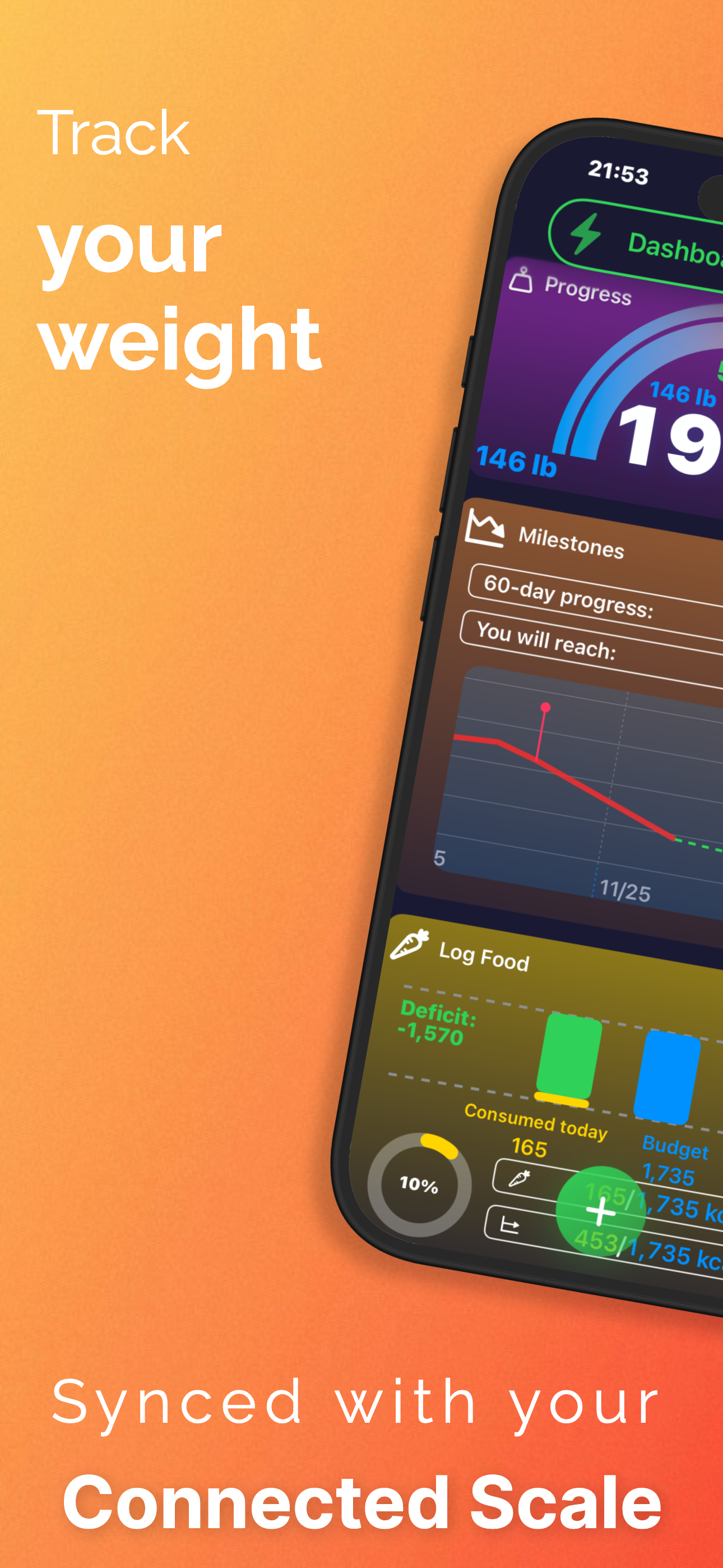
Il tuo percorso di perdita di peso
Visualizza i tuoi progressi dal peso iniziale a quello target
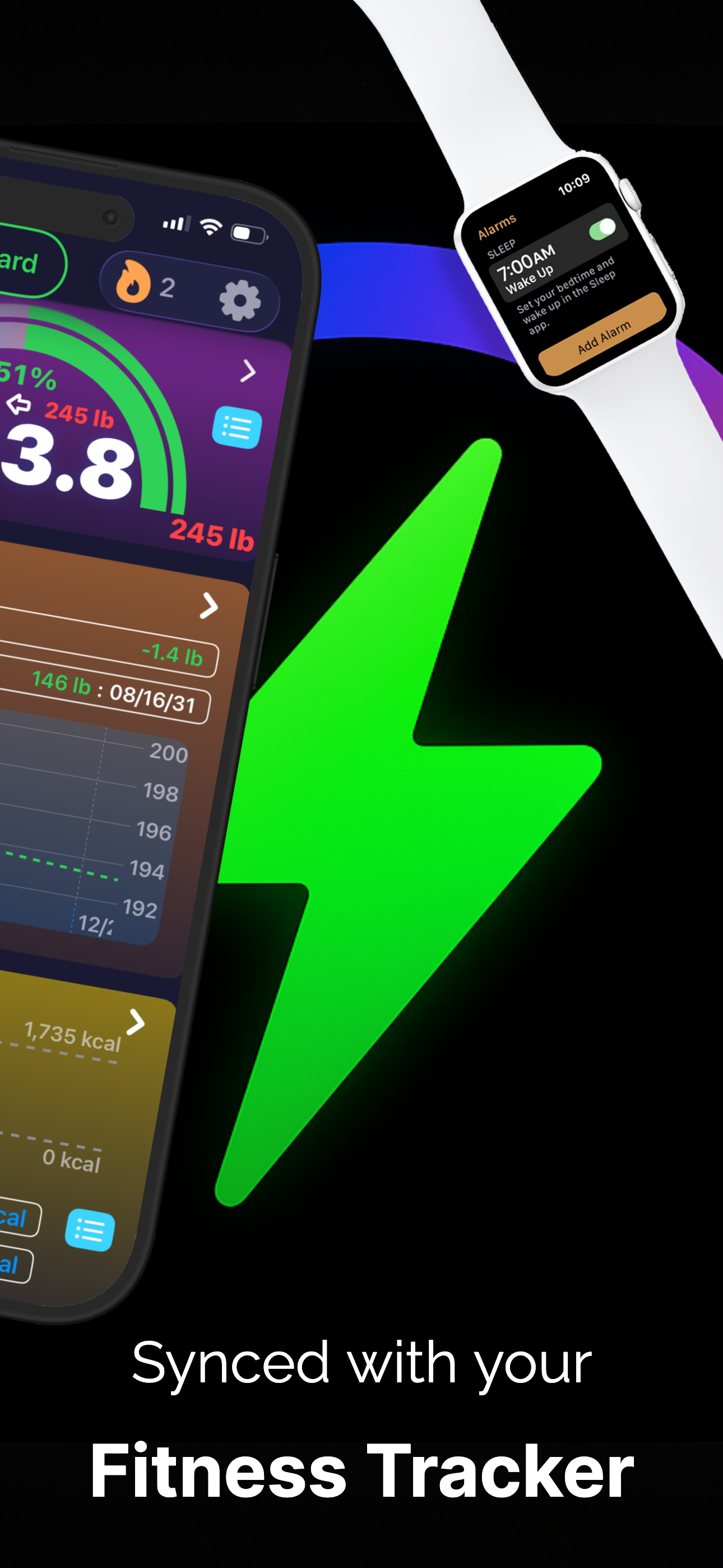
Integrazion Apple Health
Sincroniza 'l tò tracker de fitness. Visualiza l'impatto del pes in base all'intensità del workout. Nissun tracker? La nostra funzione 'Aggiungi Attività' copre 45+ sport
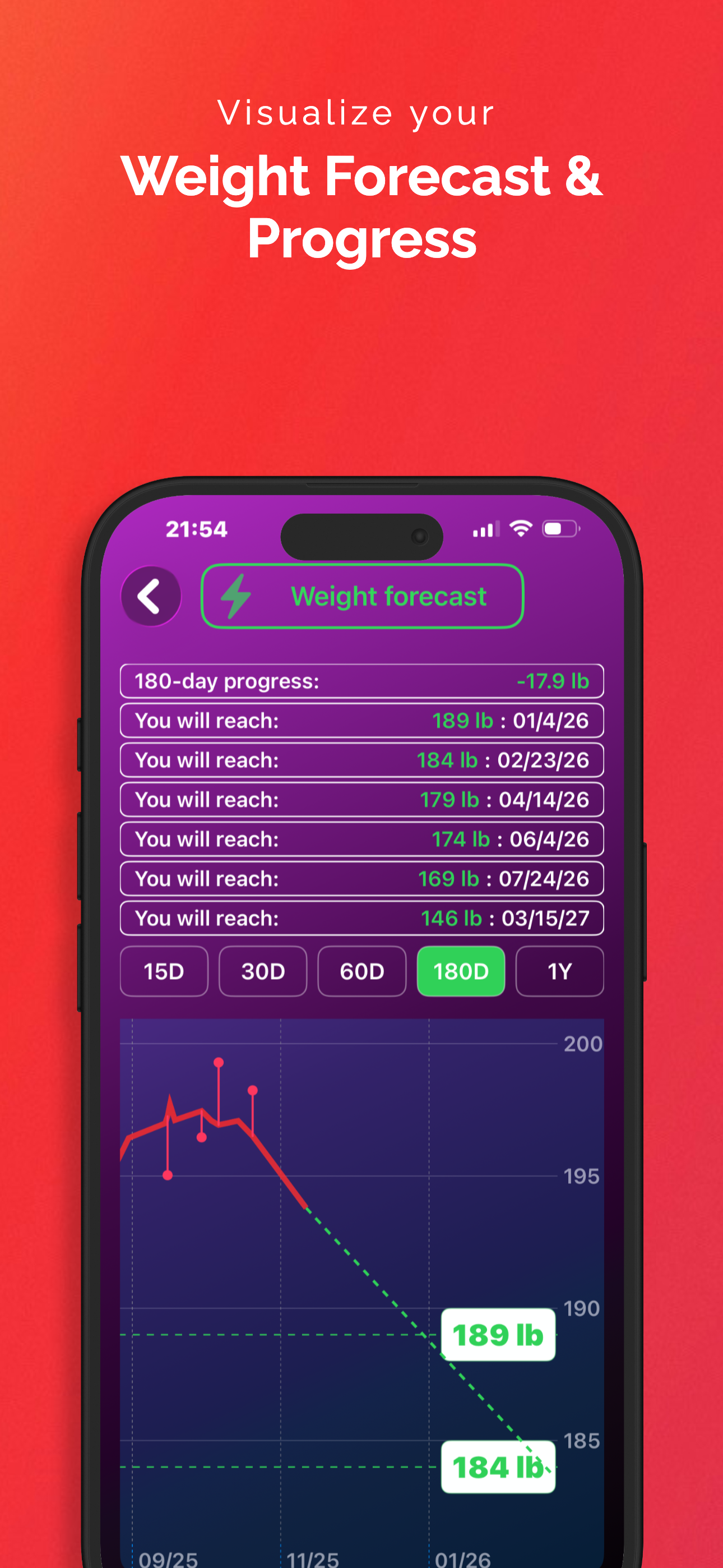
Previsiun del Pès
Vedi le date dei traguardi, il tò piano giornaliero — e se te se in carreggiata per 'l tò corpo d'estate
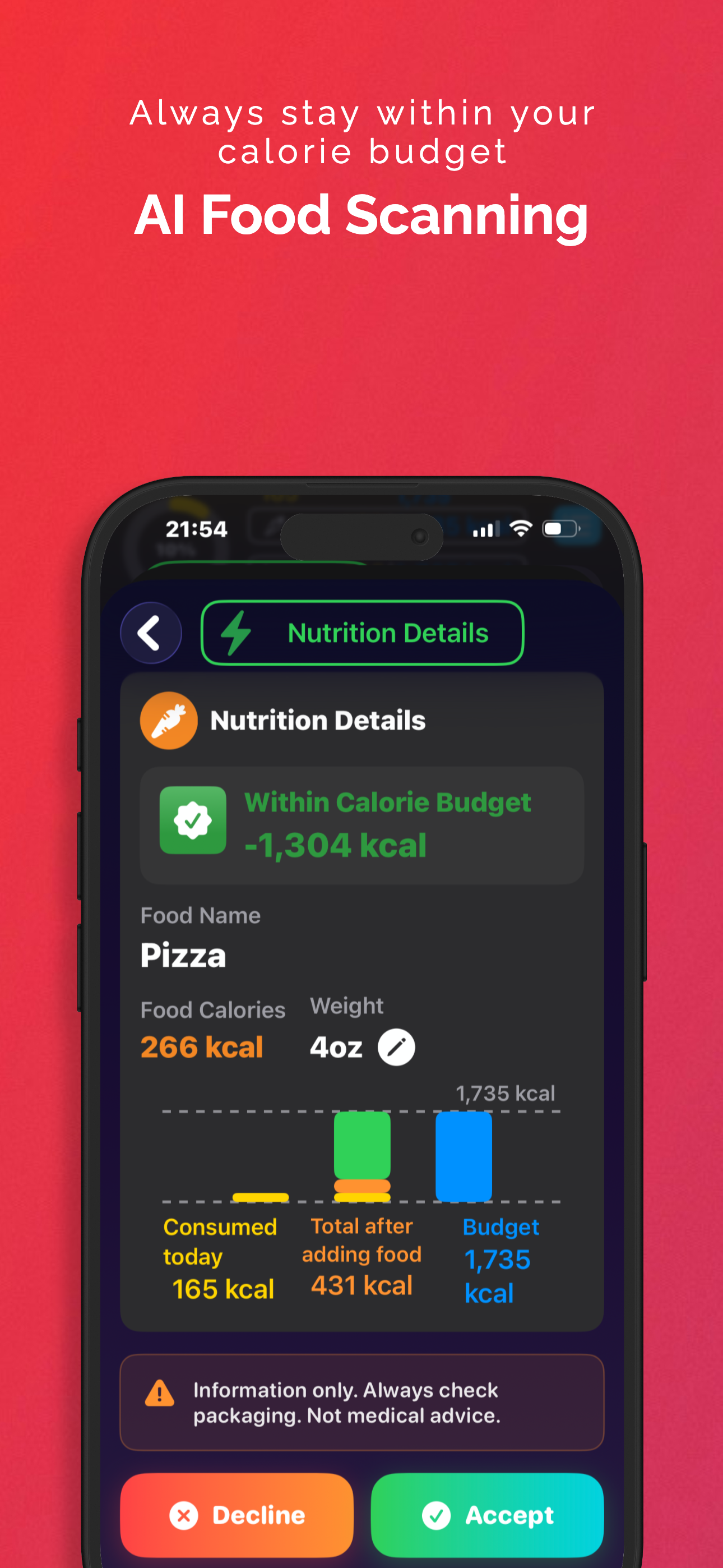
Scanner Alimentar AI
Fai una foto e ottieni stime caloriche istantanee
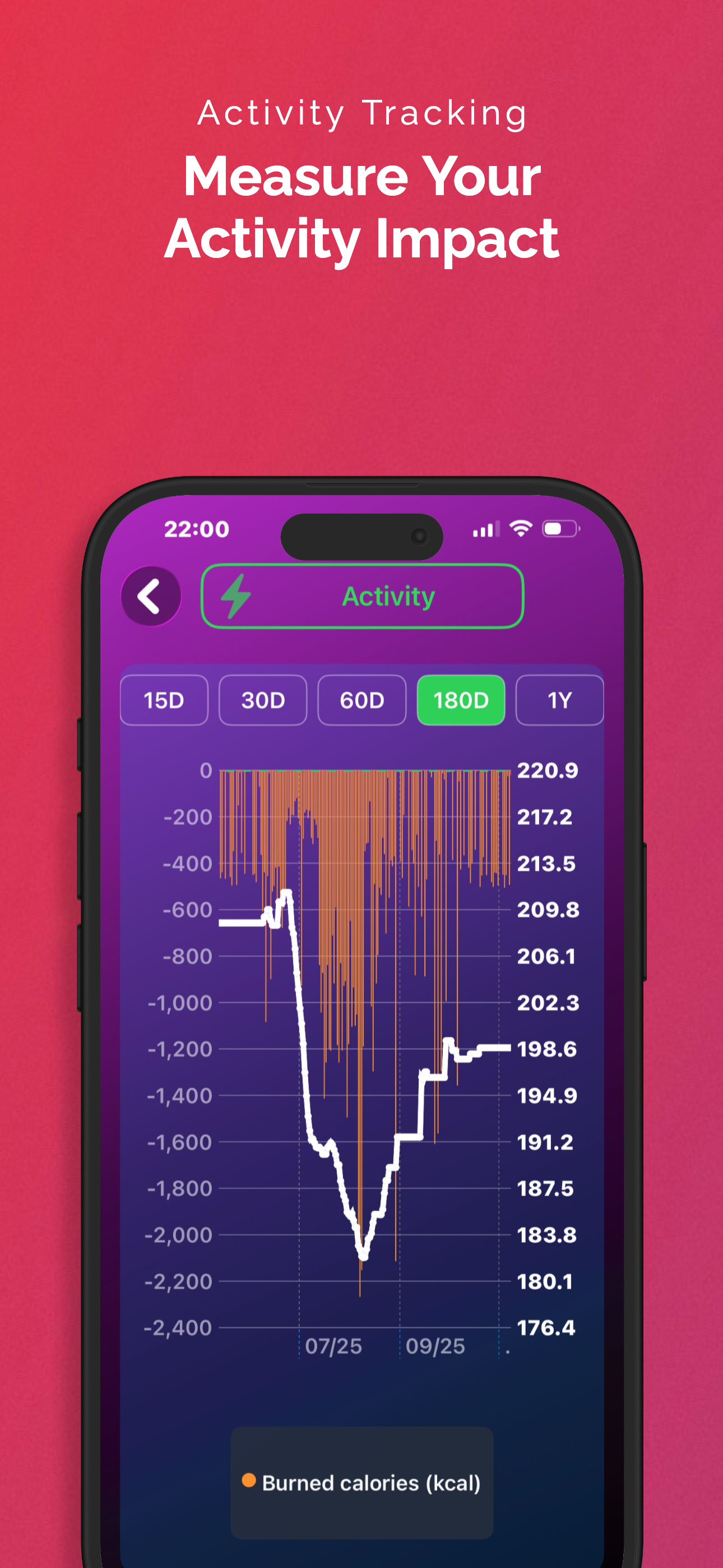
Registro de Esercizi
Guarda le calorie bruciate e cosa significano
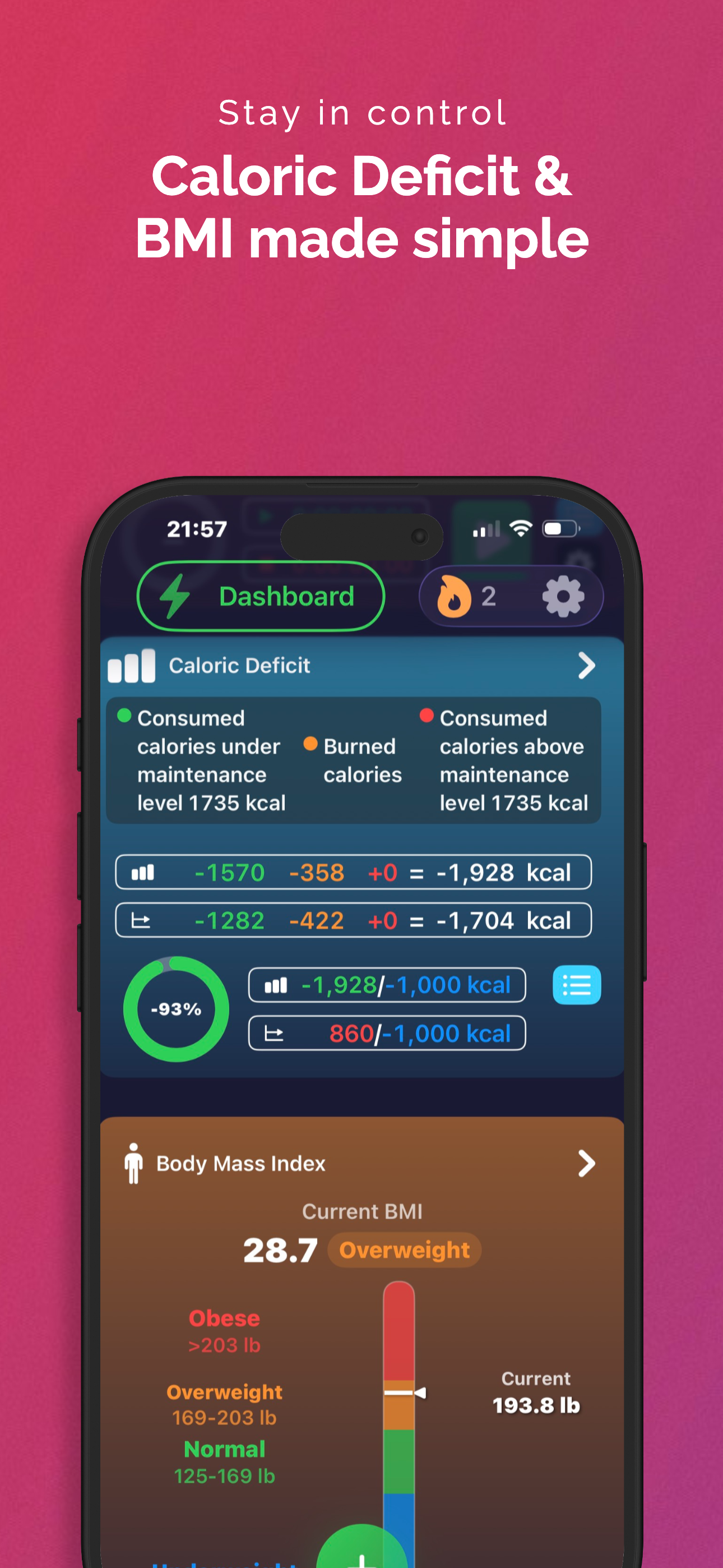
Deficit Calorico
Vedi quanto te se lontan dal obiettivo — e i veri motivi dietro a ciò
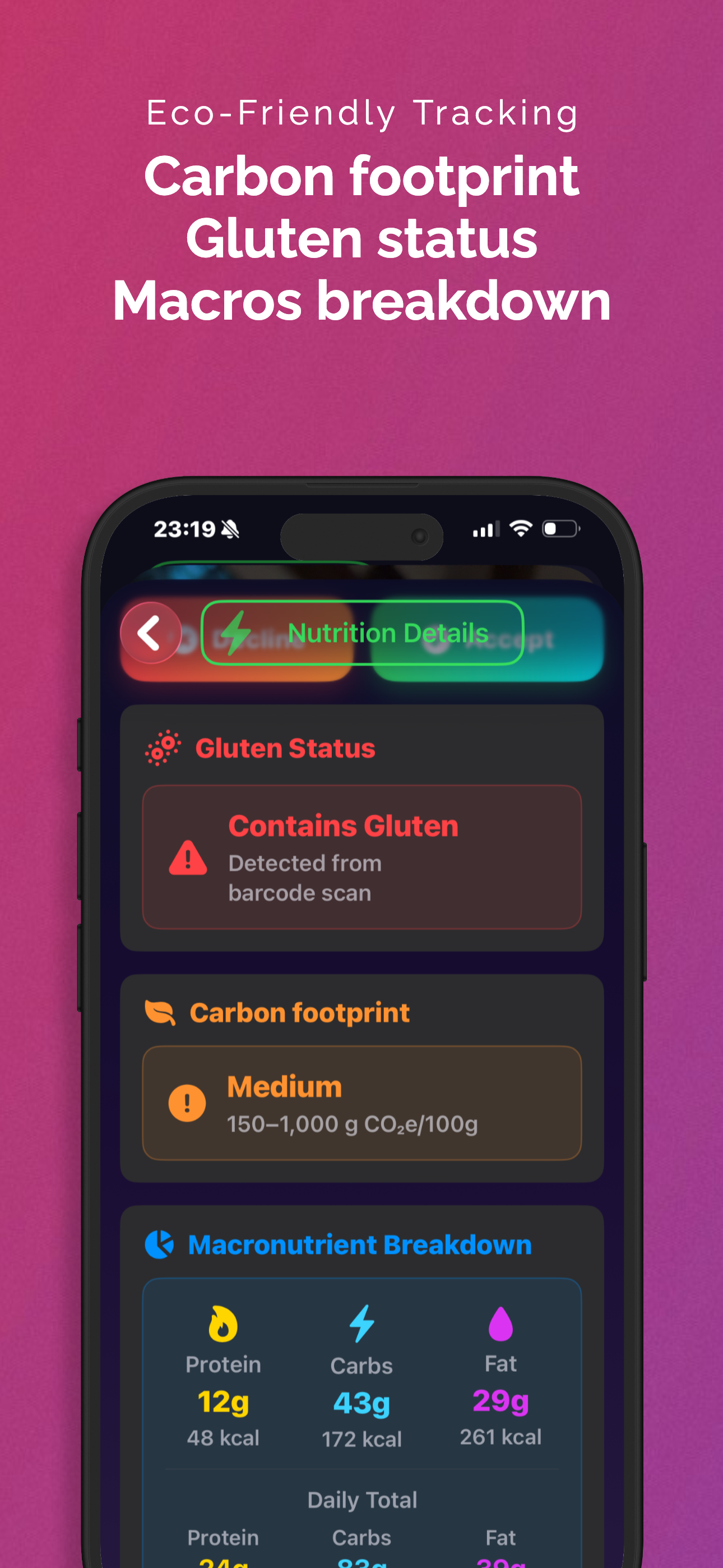
Riduci la tua impronta di carbonio
Monitora e riduci le emissioni di CO2 dalle tue scelte alimentari mentre perdi peso
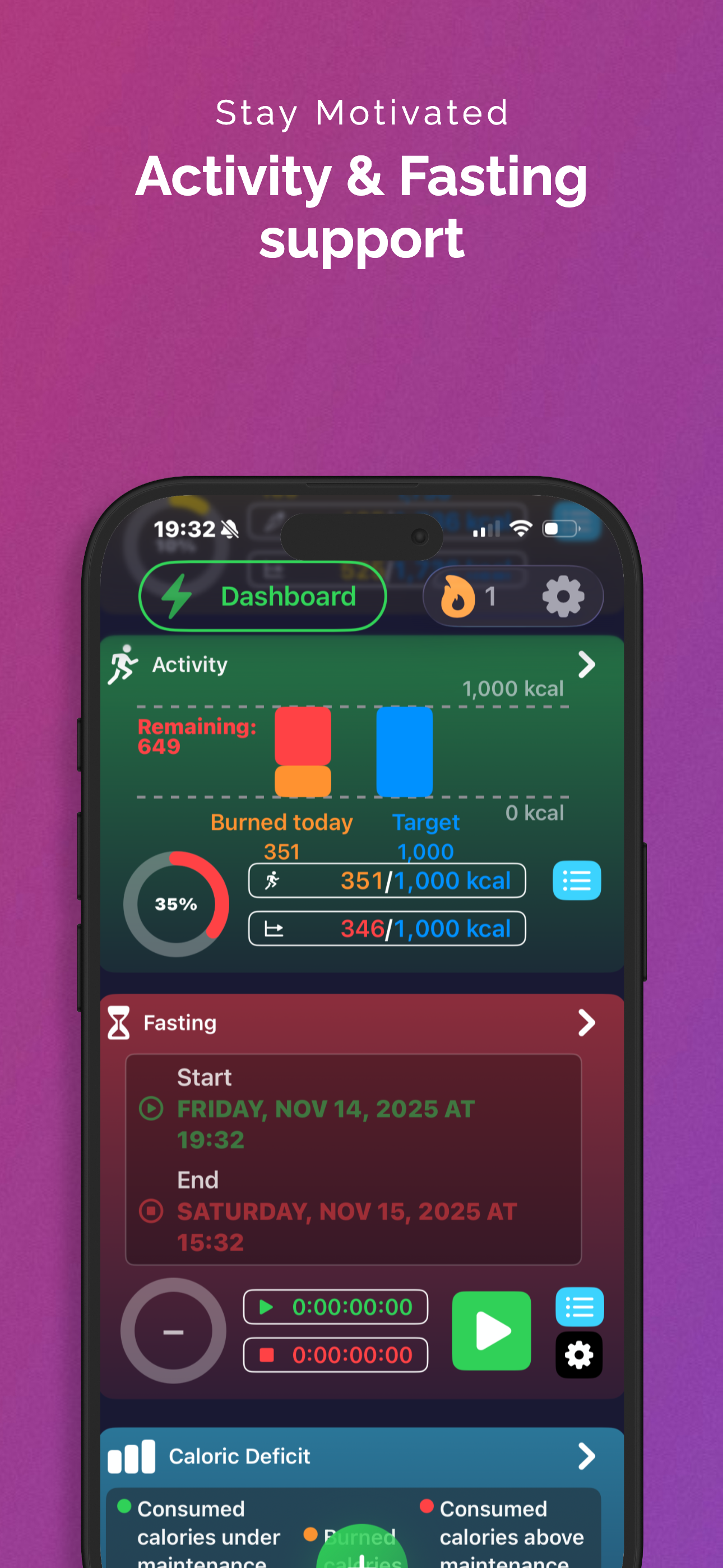
Visualizza l'impatto del Digiuno
Visualiza i periodi de digiuno — e il so effetto diretto sul tò pes
Caratteristiche
Caratteristiche supportate da ricerche per una gestione del peso sostenibile
Vedi una foto generada da AI del tò corp al tò pes obiettiv
L'AI valuta i tò grupp muscolari da una foto e mostra come te posizionet
Projezz el tò trend de pes daj dat recènt e i tò obiettiv cun el grafico Auto-Zoom.
Tracciament di calorie basaa sü 'spesa vs. budget' - un mètod semplic.
Fà una foto, ricevi stime istantanee delle calorie con 50 scansioni al dì.
Scansiona i codici a barre per stime caloriche istantanee precise e status de glutine
Visualiza i periodi de digiuno — e il so effetto diretto sul tò pes
Varda el deficit/surplus diari rispètt al tò obiettiv cun grafich visivi.
Tègn in d'öcc l'impat ambientàl (CO₂e) di tò scelte alimentari
Indicator de gluten basaa sü la scansione di barcode e l'analisi di pasto
Sincroniza 'l tò tracker de fitness. Visualiza l'impatto del pes in base all'intensità del workout. Nissun tracker? La nostra funzione 'Aggiungi Attività' copre 45+ sport
Gauge animato %-a-obbiettivo + grafico de pes Auto-Zoom esclusivo con previsione — vedi i progressi e quando i traguardi se raggiungono.
Basà sulla Scienza
Peer-reviewed references supporting weight forecasting, energy balance, carbon footprint of diets, gluten detection, nutrition databases, and AI food analysis.
Weight forecasting uses predictive models based on energy balance principles to project future weight trends from recent data. Research shows that self-monitoring of weight and calorie intake, combined with trend smoothing to reduce day-to-day noise, helps people understand their trajectory and make timely adjustments. Short-horizon predictive modeling turns your recent trajectory into actionable forecasts that support adherence and long-term habits.
Obesity (Silver Spring, Md.) · 2025
Demonstrates the importance of accurate body composition measurement in tracking weight changes, supporting the need for trend smoothing in weight forecasting models.
Annals of behavioral medicine : a publication of the Society of Behavioral Medicine · 2025
Shows how self-monitoring and feedback mechanisms support long-term weight maintenance, validating the approach of providing clear forecasts and trend visualization.
Pre-set calorie budgets with clear "within budget" or "over budget" feedback help users make informed food choices in real-time. Research demonstrates that this decision-support approach improves adherence to calorie goals by reducing cognitive load and providing immediate, actionable feedback. The simple "spend vs. budget" framework aligns with behavioral economics principles that show people make better decisions when they have clear constraints and instant feedback on their choices.
Annals of behavioral medicine : a publication of the Society of Behavioral Medicine · 2025
Shows that structured goal-setting and feedback mechanisms improve adherence to dietary targets, supporting the budget-based calorie approach.
Nature medicine · 2023
Demonstrates that structured calorie management approaches improve adherence and outcomes compared to standard care.
Energy balance—the relationship between calories consumed and calories burned—is the primary driver of weight change. Research consistently shows that creating a calorie deficit leads to weight loss, while a surplus leads to weight gain. Visualizing this deficit in real-time helps users understand how their daily choices impact their progress toward goals. The app translates energy balance into plain language, showing the gap between current intake and target, and what changes can close that gap.
Obesity (Silver Spring, Md.) · 2025
Confirms that energy balance is the fundamental mechanism driving weight change, validating the calorie deficit approach.
Nutrients · 2022
Shows that calorie deficit, regardless of timing, drives weight loss, supporting the energy balance principle.
Artificial intelligence and machine learning enable automated food recognition from photos, text descriptions, and barcode scanning. Research shows that AI-powered nutrition estimation can provide reasonable accuracy for common foods, helping users log meals more quickly and consistently. The combination of photo analysis, barcode scanning, and text parsing creates multiple pathways for food logging, reducing barriers to self-monitoring and improving adherence to calorie tracking.
Communications medicine · 2025
Demonstrates how AI and large language models can accurately estimate nutrition from food images and descriptions.
Journal of imaging · 2025
Shows that AI can extract nutrition information from food labels, supporting barcode and text-based food logging.
Food production accounts for a significant portion of global greenhouse gas emissions. Research shows that different foods have vastly different carbon footprints, and dietary choices can substantially impact environmental sustainability. Tracking the carbon footprint of meals helps users understand the environmental impact of their food choices and make more sustainable decisions. Studies demonstrate that even small dietary changes can meaningfully reduce carbon emissions.
The American journal of clinical nutrition · 2025
Shows that sustainable dietary patterns can reduce greenhouse gas emissions while improving diet quality, validating carbon footprint tracking.
The American journal of clinical nutrition · 2025
Demonstrates the relationship between diet quality and environmental sustainability, supporting carbon footprint awareness in food choices.
For people with celiac disease or gluten sensitivity, avoiding gluten is essential for health. Research shows that even small amounts of gluten can cause symptoms and long-term damage in sensitive individuals. Barcode scanning and food analysis can help identify gluten-containing products, providing quick screening to support gluten-free dietary adherence. While the app provides indicators based on product information, it's important to note that it's an estimator and not a replacement for careful label reading or medical guidance.
Nutrients · 2024
Reviews diagnostic methods for celiac disease, highlighting the importance of accurate gluten detection for those with celiac disease.
Food chemistry · 2024
Reviews technological approaches to gluten detection in foods, supporting the use of food analysis for gluten screening.
Tégn la tò pes con un control de calorie basà sü 'l budget e grafich motivant
Scarica LyteFast incö e t'he un prova gratuita de 3 dì!
Scarica su App StoreCanceula quand te voeuret • 151 lingue