AI
Previzión de Cuerpo AI
Mira una foto de tu cuerpo generada por AI a tu peso meta
🎉 ¡La primera app de seguimiento de peso en Ladino!
Tracciamento del peso supportato dalla scienza e previsione con scansione alimentare AI per calorie, impronta di carbonio e avvisi sul glutine tramite codice a barre; oltre a budget calorici e deficit calorico.
Características
Desliza para ver las capturas de pantalla de la app
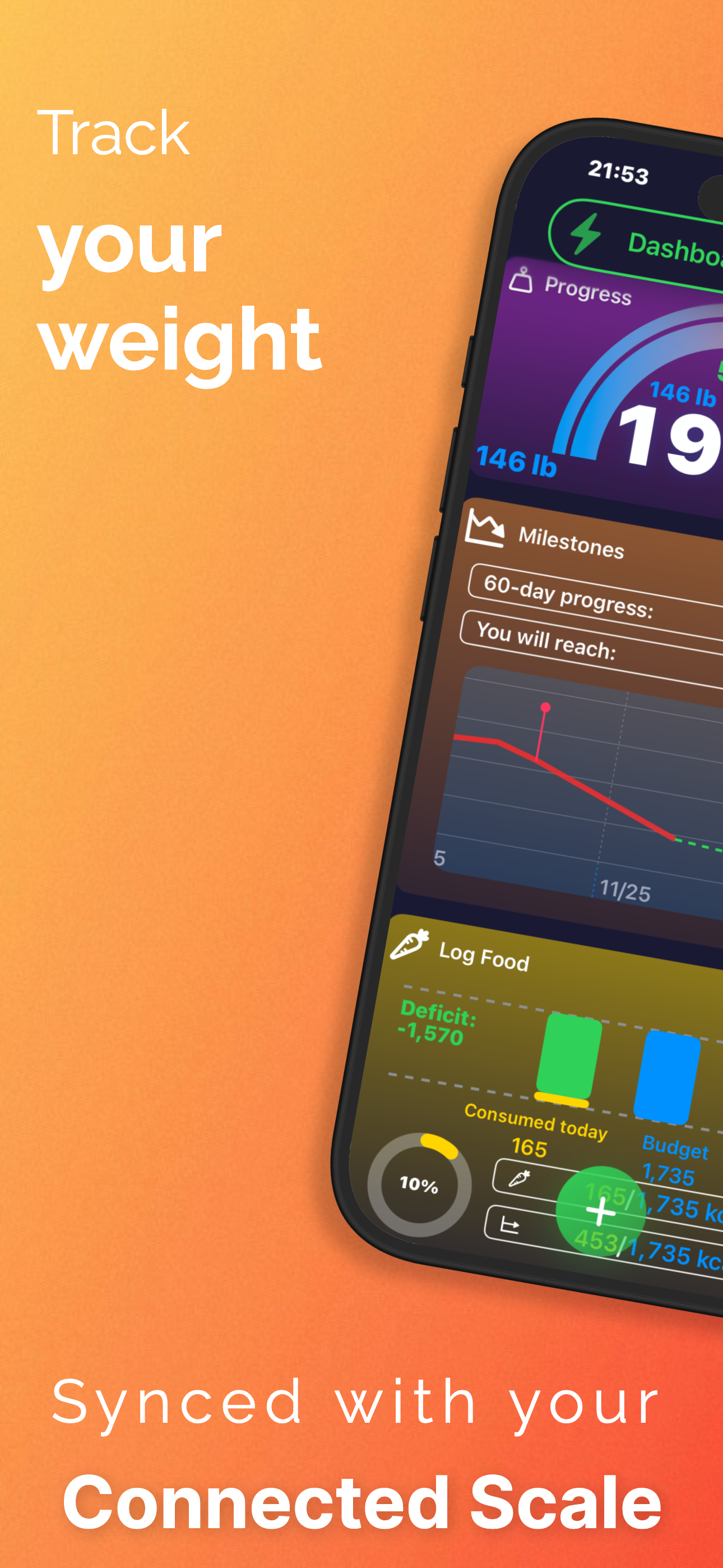
Tu Viaje de Pérdida de Peso
Visualiza tu progreso desde el inicio hasta el peso objetivo
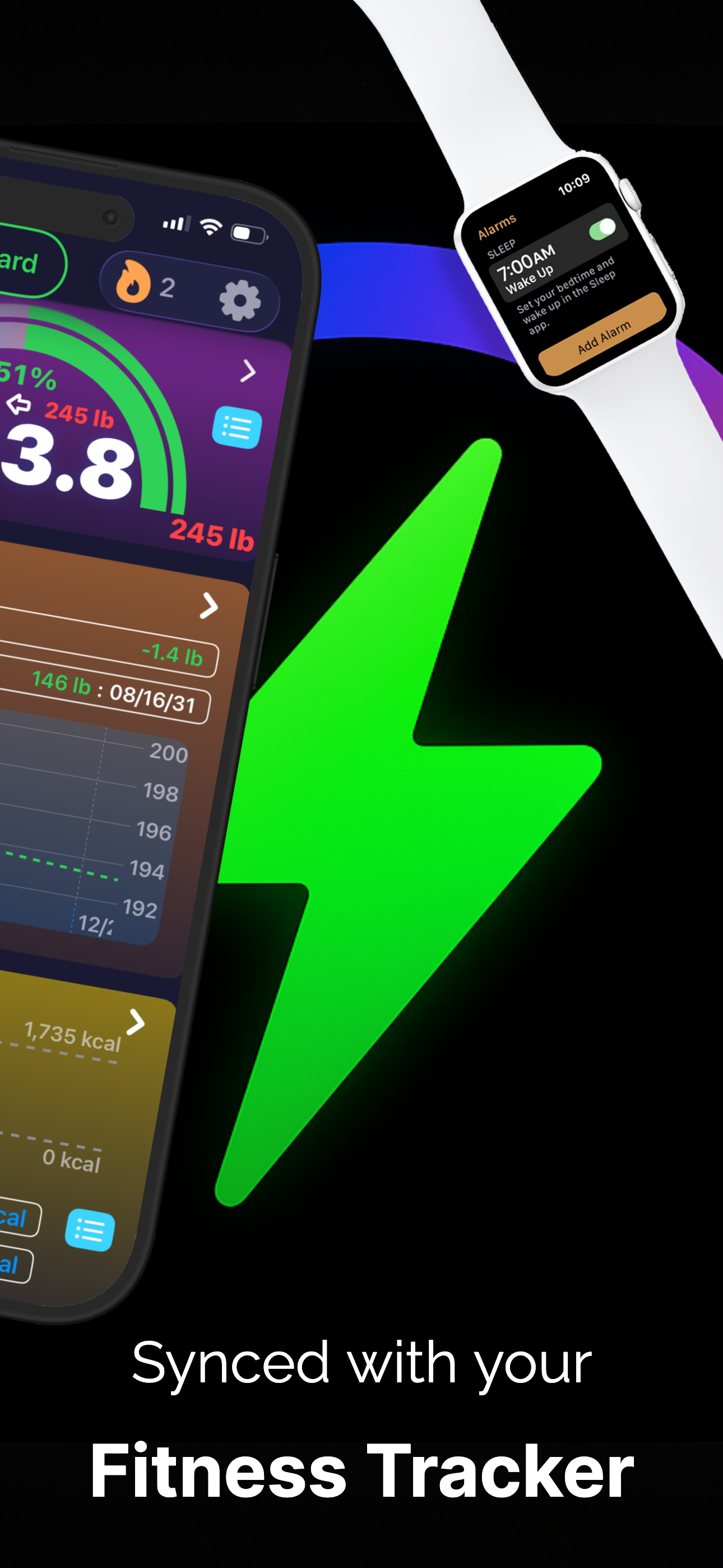
Integrazion de Apple Health
Sincroniza tu rastreador de fitness. Visualiza el impacto del peso según la intensidad del entrenamiento. ¿Sin rastreador? Nuestra función 'Agregar Actividad' cubre más de 45 deportes
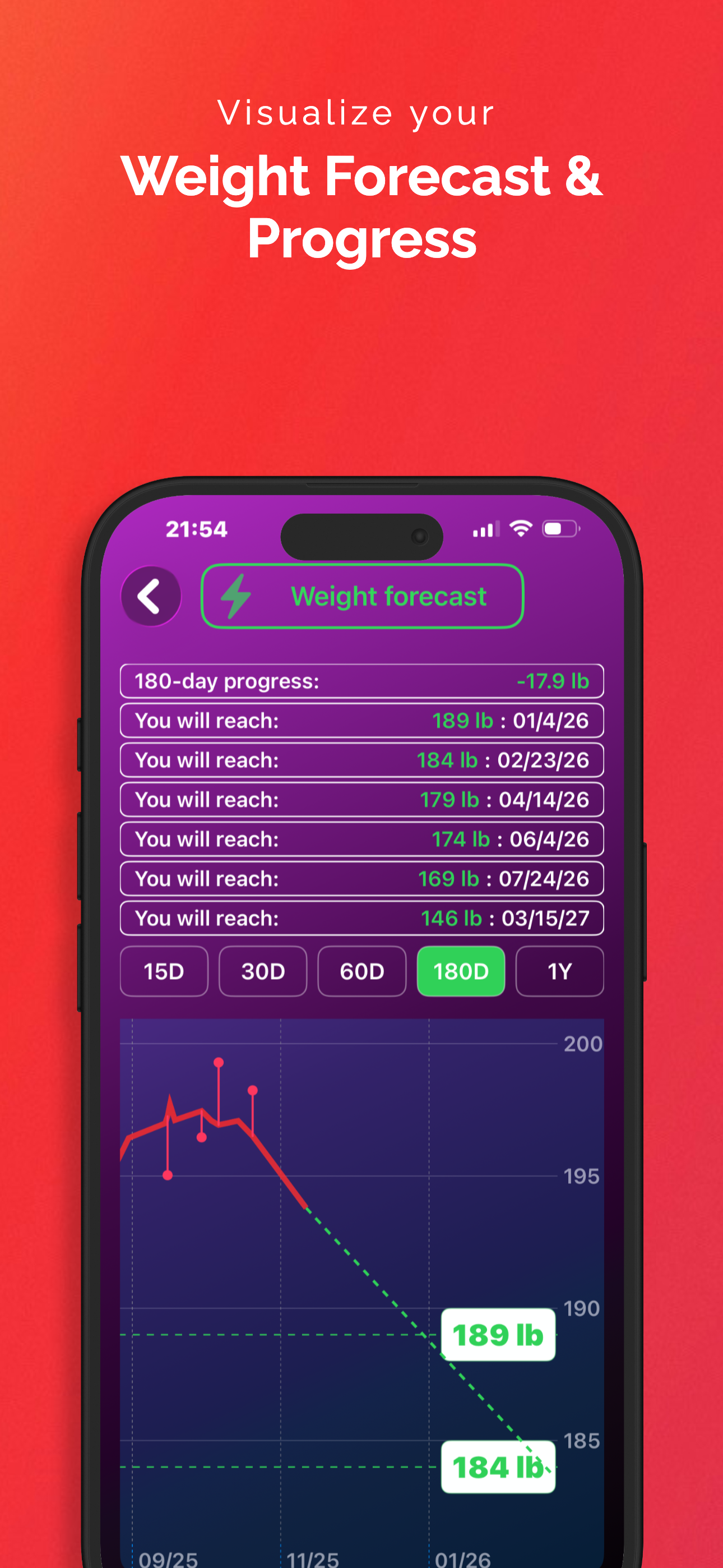
Previsión de Peso
Ve las fechas de hitos, tu plan diario — y si estás en camino para tu cuerpo de verano
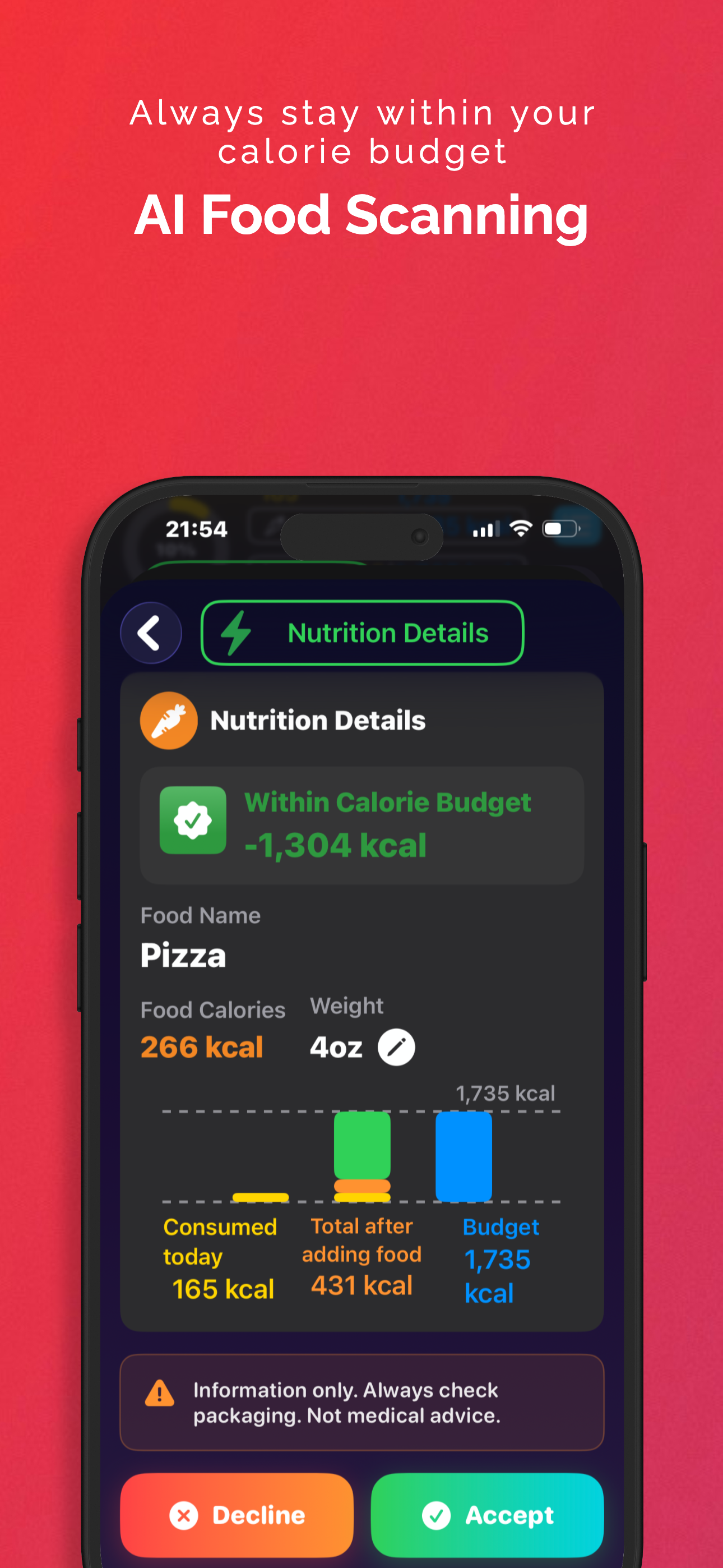
Escáner de Comida AI
Toma una foto y obtén estimaciones instantáneas de calorías
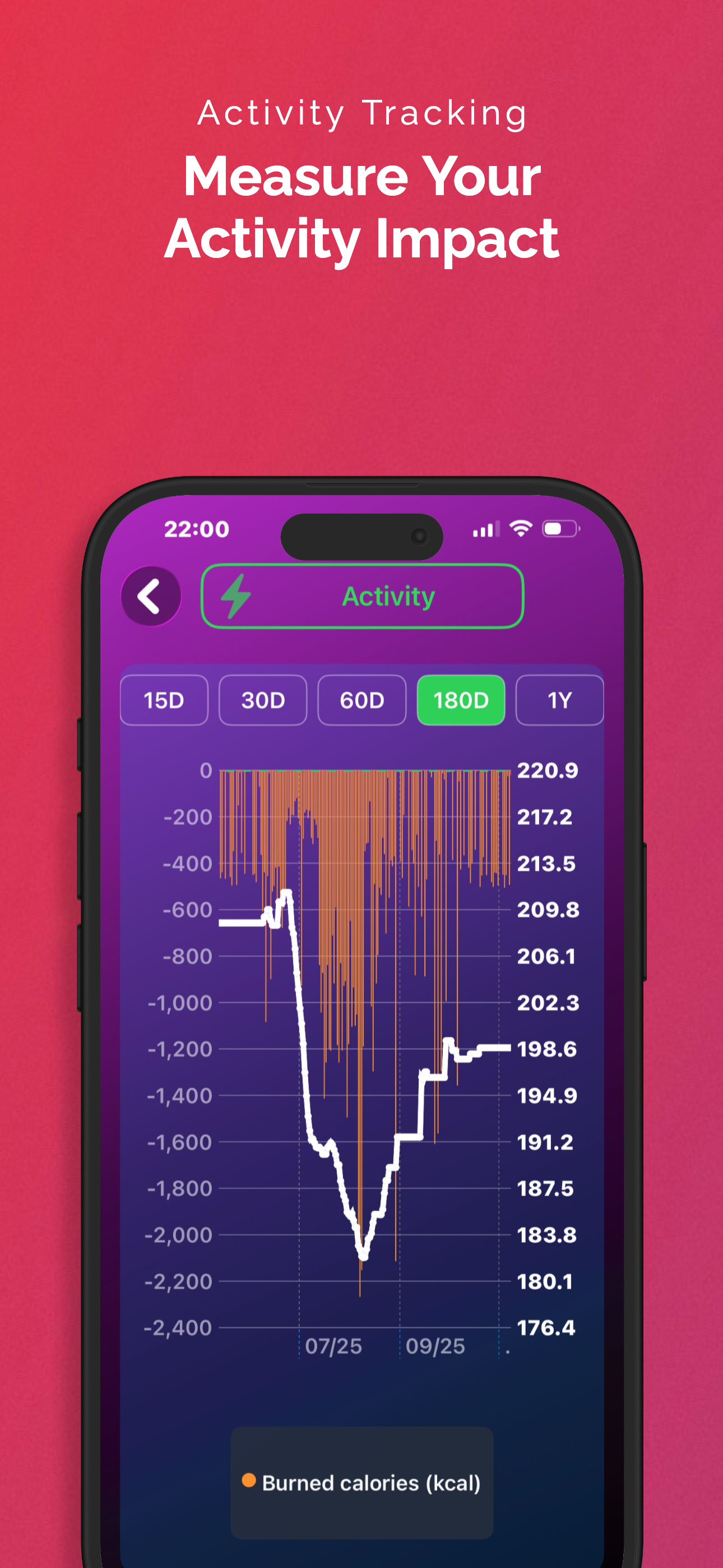
Registre d'Exercici
Veure calories cremades i què signifiquen
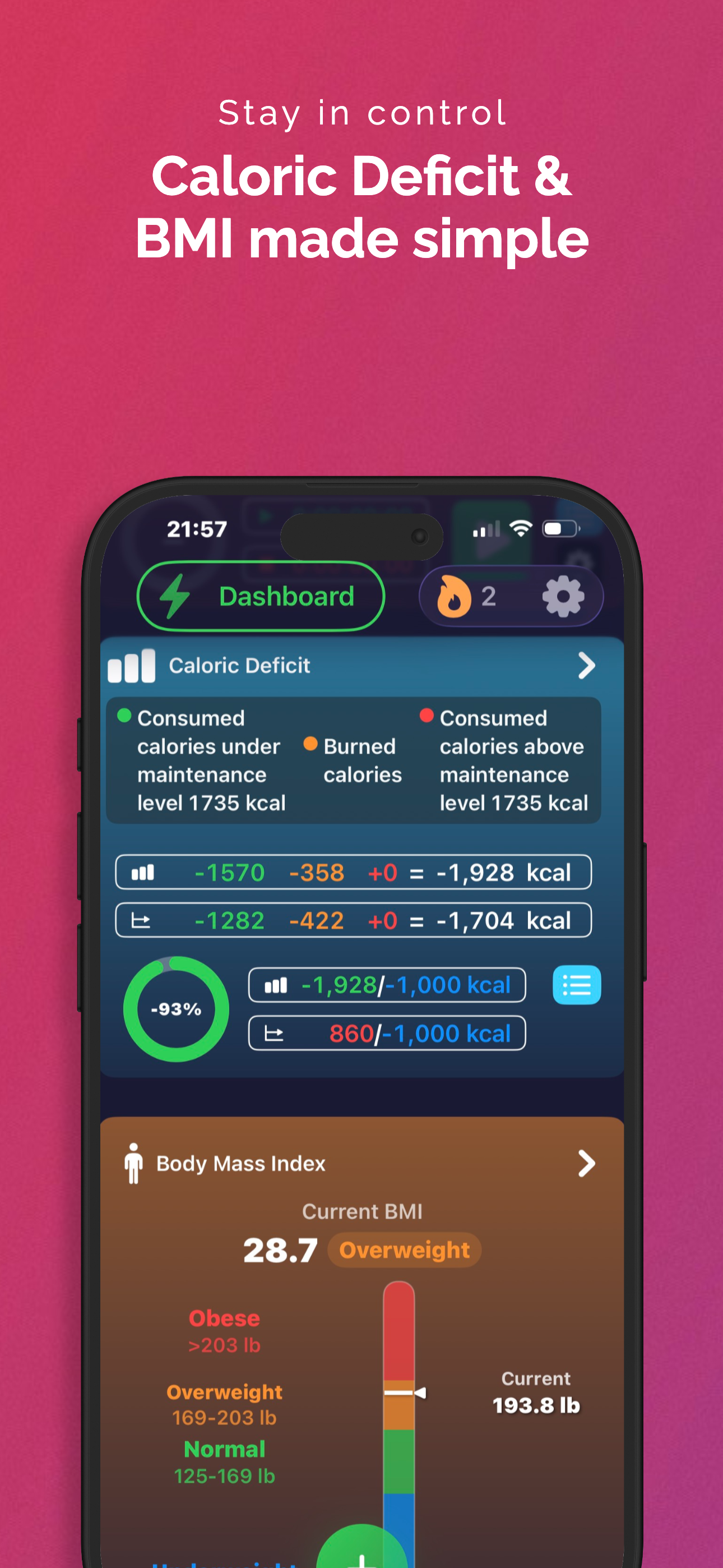
Déficit de Calorías
Ve qué tan lejos estás de la meta—y las verdaderas razones detrás de ello
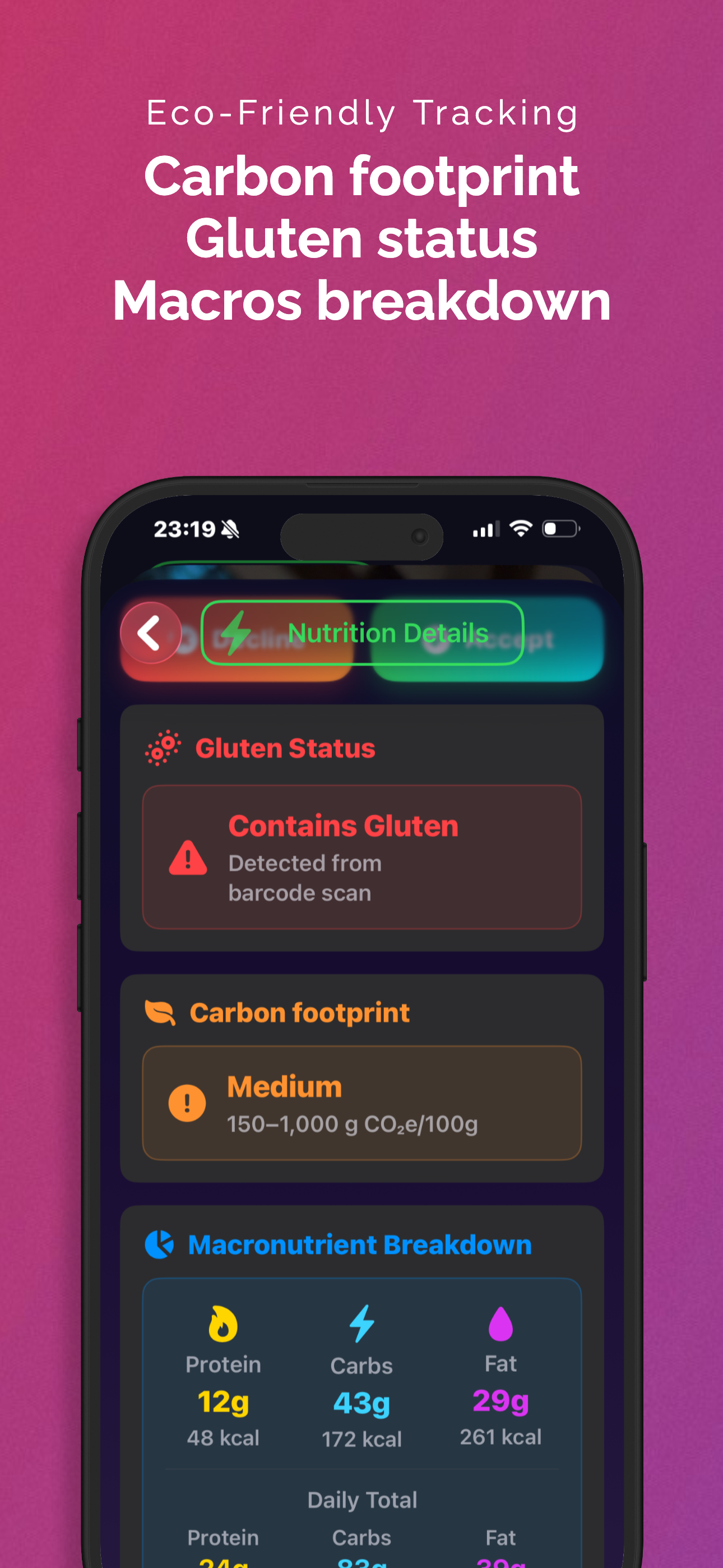
Reduce tu Huella de Carbono
Rastrea y reduce las emisiones de CO2 de tus elecciones alimentarias mientras pierdes peso
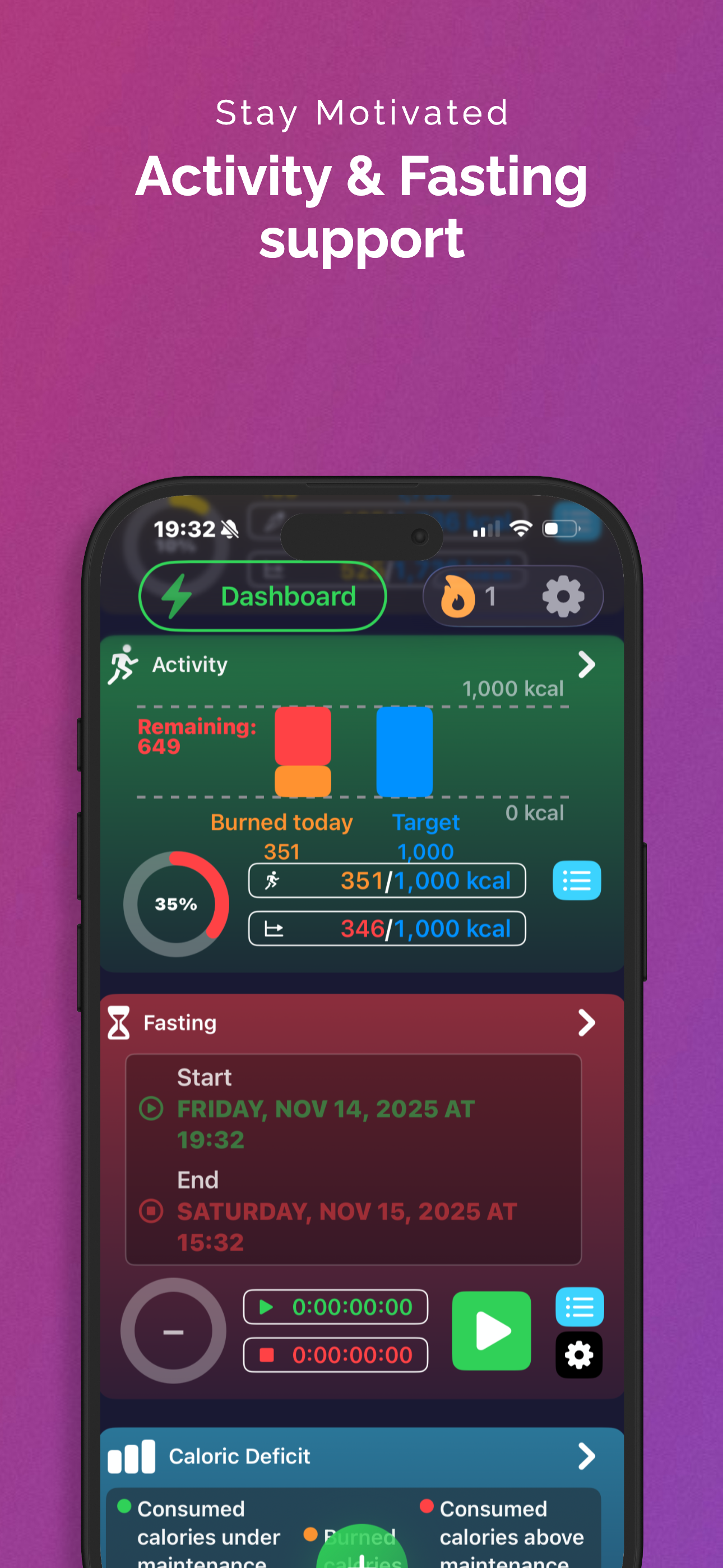
Visualitza l'impacte del Fasting
Visualiza las ventanas de ayuno—y su efecto directo en tu peso
Características
Características respaldadas por la ciencia para un manejo de peso sostenible
Mira una foto de tu cuerpo generada por AI a tu peso meta
AI puntúa tus grupos musculares de una foto y muestra cómo te clasificas
Proyecta tu tendencia de peso a partir de datos recientes y metas con el gráfico Auto-Zoom.
Seguimiento de calorías basado en el presupuesto - un enfoque simple de 'gastar vs. presupuesto'
Fai na foto, otén estimas de calorías instantáneas con 50 escans por día.
Escanea códigos de barras para estimaciones precisas de calorías instantáneas y estado de gluten
Visualiza las ventanas de ayuno—y su efecto directo en tu peso
Ve el déficit/superávit diario en comparación con tu meta con gráficos visuales.
Sigue el impacto ambiental (CO₂e) de tus elecciones alimentarias
Indicadores de gluten basados en el escaneo de códigos de barras y análisis de comidas
Sincroniza tu rastreador de fitness. Visualiza el impacto del peso según la intensidad del entrenamiento. ¿Sin rastreador? Nuestra función 'Agregar Actividad' cubre más de 45 deportes
Medidor animado de %-a-meta + gráfico de peso Auto-Zoom exclusivo con predicción—ve el progreso y cuándo se alcanzan los hitos.
Basado en Ciencia
Peer-reviewed references supporting weight forecasting, energy balance, carbon footprint of diets, gluten detection, nutrition databases, and AI food analysis.
Weight forecasting uses predictive models based on energy balance principles to project future weight trends from recent data. Research shows that self-monitoring of weight and calorie intake, combined with trend smoothing to reduce day-to-day noise, helps people understand their trajectory and make timely adjustments. Short-horizon predictive modeling turns your recent trajectory into actionable forecasts that support adherence and long-term habits.
Obesity (Silver Spring, Md.) · 2025
Demonstrates the importance of accurate body composition measurement in tracking weight changes, supporting the need for trend smoothing in weight forecasting models.
Annals of behavioral medicine : a publication of the Society of Behavioral Medicine · 2025
Shows how self-monitoring and feedback mechanisms support long-term weight maintenance, validating the approach of providing clear forecasts and trend visualization.
Pre-set calorie budgets with clear "within budget" or "over budget" feedback help users make informed food choices in real-time. Research demonstrates that this decision-support approach improves adherence to calorie goals by reducing cognitive load and providing immediate, actionable feedback. The simple "spend vs. budget" framework aligns with behavioral economics principles that show people make better decisions when they have clear constraints and instant feedback on their choices.
Annals of behavioral medicine : a publication of the Society of Behavioral Medicine · 2025
Shows that structured goal-setting and feedback mechanisms improve adherence to dietary targets, supporting the budget-based calorie approach.
Nature medicine · 2023
Demonstrates that structured calorie management approaches improve adherence and outcomes compared to standard care.
Energy balance—the relationship between calories consumed and calories burned—is the primary driver of weight change. Research consistently shows that creating a calorie deficit leads to weight loss, while a surplus leads to weight gain. Visualizing this deficit in real-time helps users understand how their daily choices impact their progress toward goals. The app translates energy balance into plain language, showing the gap between current intake and target, and what changes can close that gap.
Obesity (Silver Spring, Md.) · 2025
Confirms that energy balance is the fundamental mechanism driving weight change, validating the calorie deficit approach.
Nutrients · 2022
Shows that calorie deficit, regardless of timing, drives weight loss, supporting the energy balance principle.
Artificial intelligence and machine learning enable automated food recognition from photos, text descriptions, and barcode scanning. Research shows that AI-powered nutrition estimation can provide reasonable accuracy for common foods, helping users log meals more quickly and consistently. The combination of photo analysis, barcode scanning, and text parsing creates multiple pathways for food logging, reducing barriers to self-monitoring and improving adherence to calorie tracking.
Communications medicine · 2025
Demonstrates how AI and large language models can accurately estimate nutrition from food images and descriptions.
Journal of imaging · 2025
Shows that AI can extract nutrition information from food labels, supporting barcode and text-based food logging.
Food production accounts for a significant portion of global greenhouse gas emissions. Research shows that different foods have vastly different carbon footprints, and dietary choices can substantially impact environmental sustainability. Tracking the carbon footprint of meals helps users understand the environmental impact of their food choices and make more sustainable decisions. Studies demonstrate that even small dietary changes can meaningfully reduce carbon emissions.
The American journal of clinical nutrition · 2025
Shows that sustainable dietary patterns can reduce greenhouse gas emissions while improving diet quality, validating carbon footprint tracking.
The American journal of clinical nutrition · 2025
Demonstrates the relationship between diet quality and environmental sustainability, supporting carbon footprint awareness in food choices.
For people with celiac disease or gluten sensitivity, avoiding gluten is essential for health. Research shows that even small amounts of gluten can cause symptoms and long-term damage in sensitive individuals. Barcode scanning and food analysis can help identify gluten-containing products, providing quick screening to support gluten-free dietary adherence. While the app provides indicators based on product information, it's important to note that it's an estimator and not a replacement for careful label reading or medical guidance.
Nutrients · 2024
Reviews diagnostic methods for celiac disease, highlighting the importance of accurate gluten detection for those with celiac disease.
Food chemistry · 2024
Reviews technological approaches to gluten detection in foods, supporting the use of food analysis for gluten screening.
Sigue tu peso con control de calorías basado en presupuesto y gráficos motivadores
Descarga LyteFast hoy y obtén tu prueba gratuita de 3 días.
Descargar en App StoreAnula en cualquier momento • 151 idiomas