AI
AI Body Preview
See an AI-generated photo of your body at your goal weight
NEW: AI Body Preview generates a goal-physique visualization. Muscle Rating scores 8 muscle groups from a photo. Plus weight forecast, calorie tracking & AI food scan.
Recorded in the app — every screen shown in your language.
Features
Swipe through app screenshots
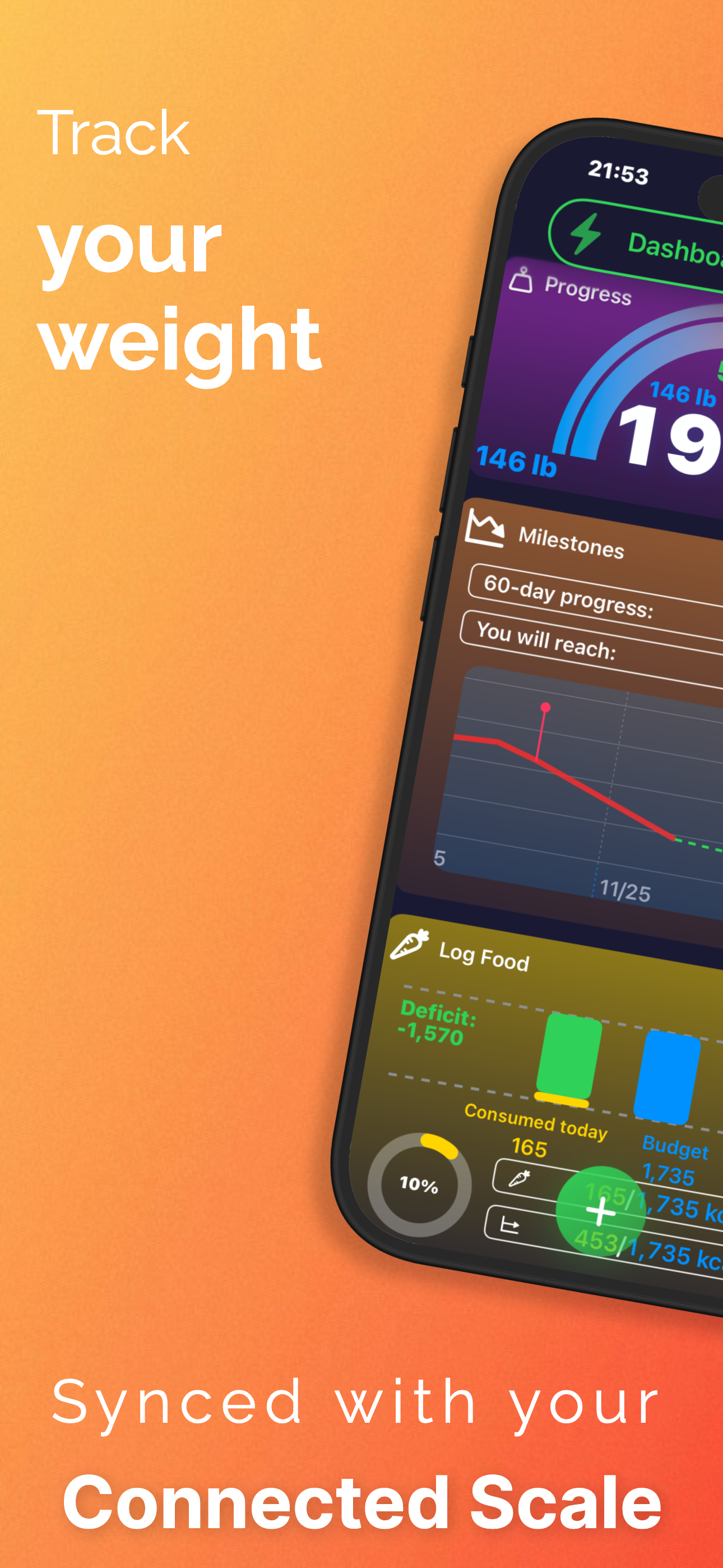
Your Weight Loss Journey
Visualize your progress from start to target weight
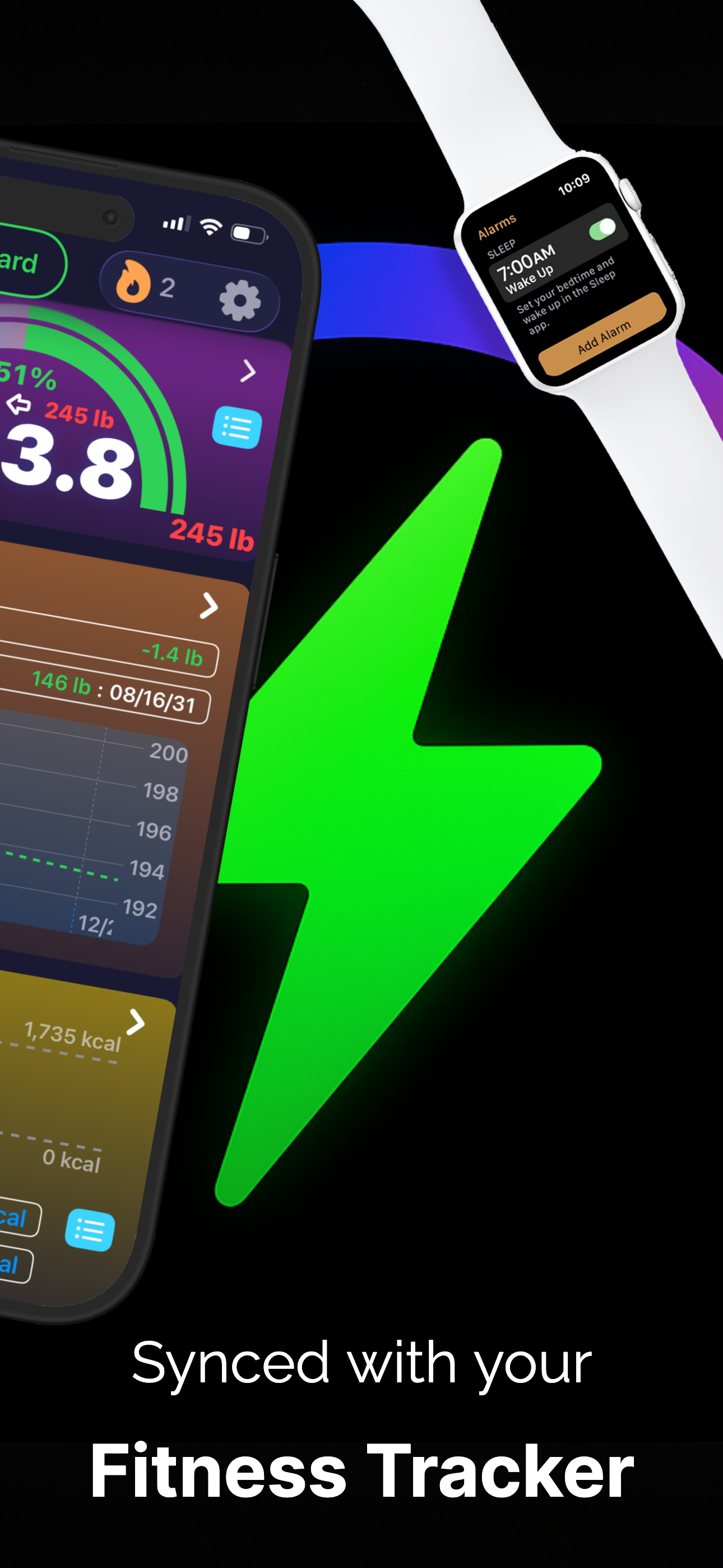
Apple Health Integration
Sync your fitness tracker. Visualize weight impact by workout intensity. No tracker? Our 'Add Activity' feature covers 45+ sports
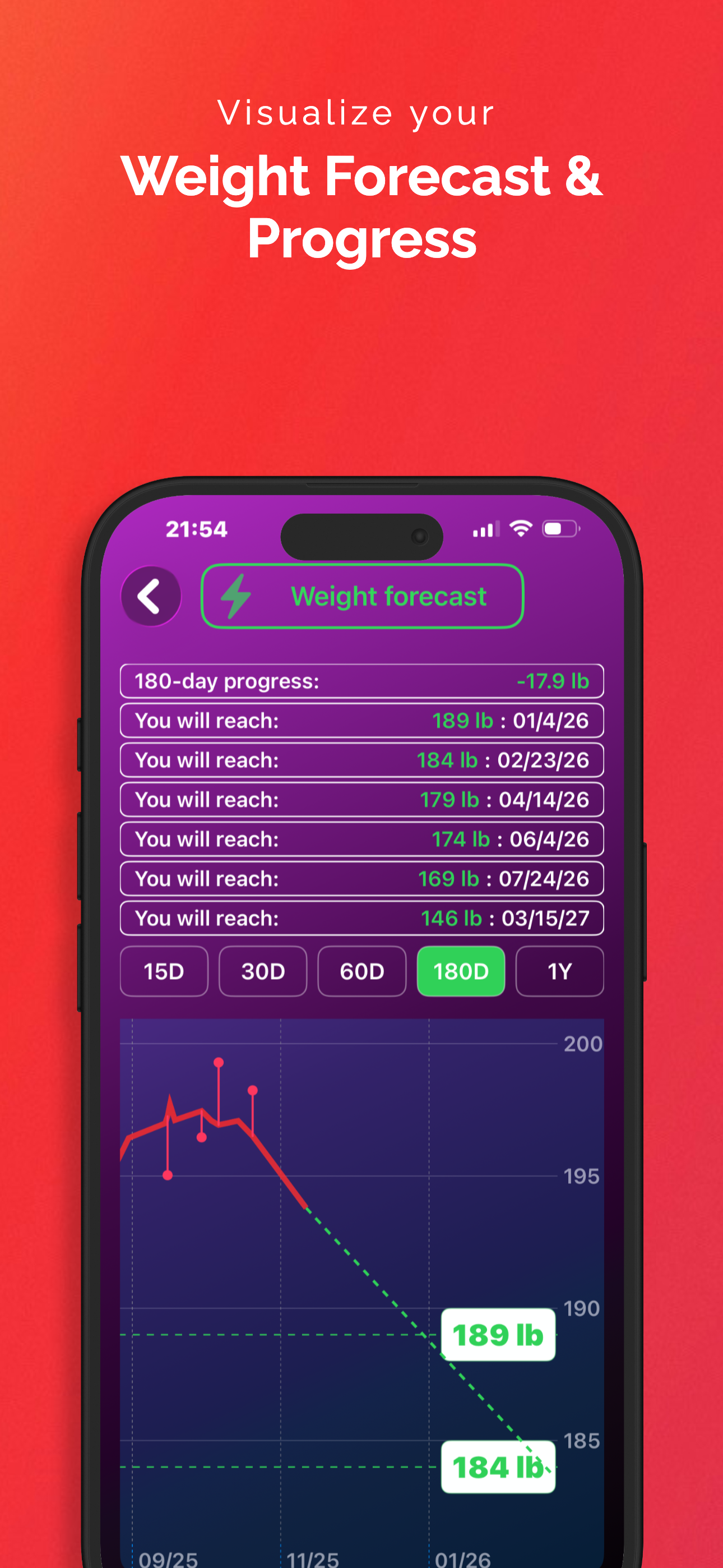
Weight Forecast
See milestone dates, your daily plan — and whether you're on track for your summer body
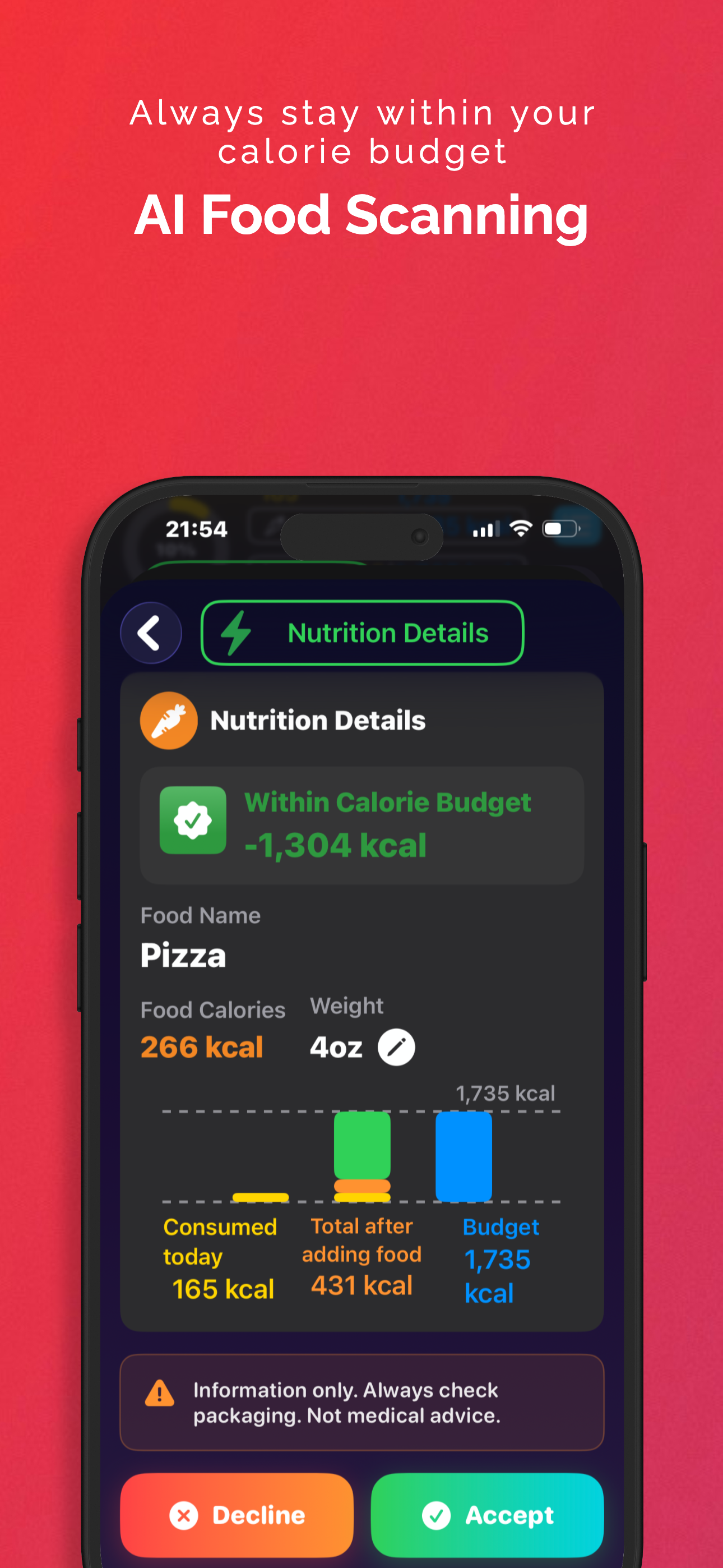
AI Food Scanner
Snap a photo and get instant calorie estimates
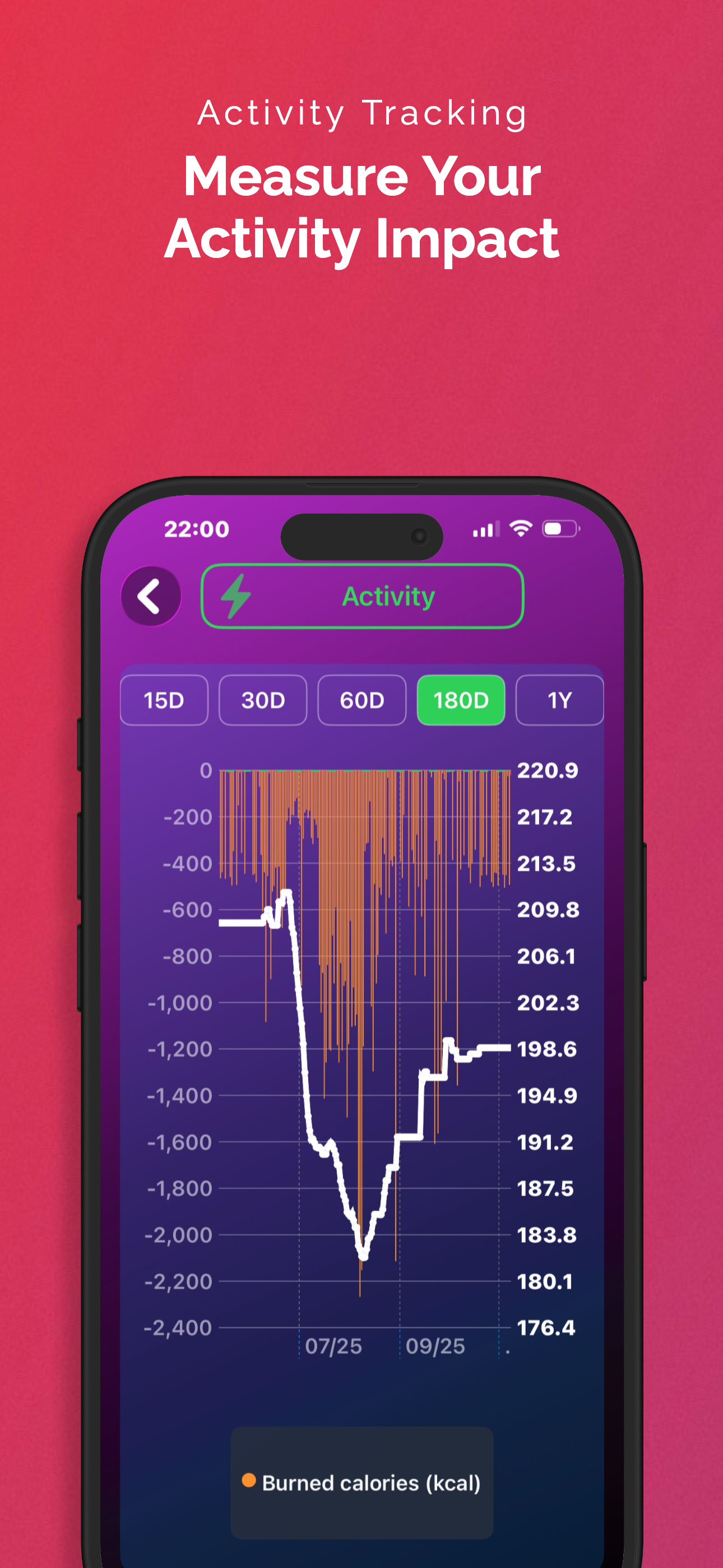
Exercise Log
See calories burned and what they mean
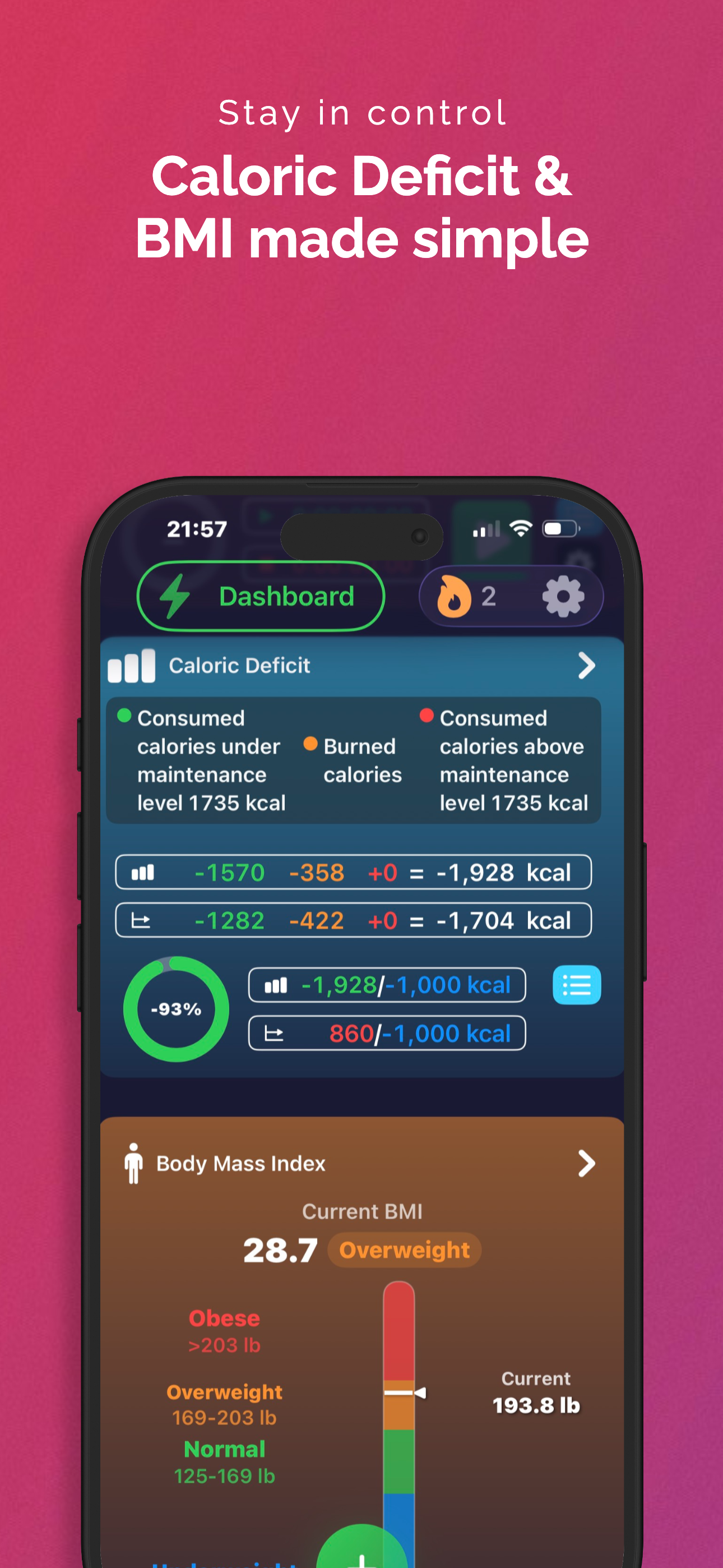
Calorie Deficit
See how far you are from goal—and the real reasons behind it
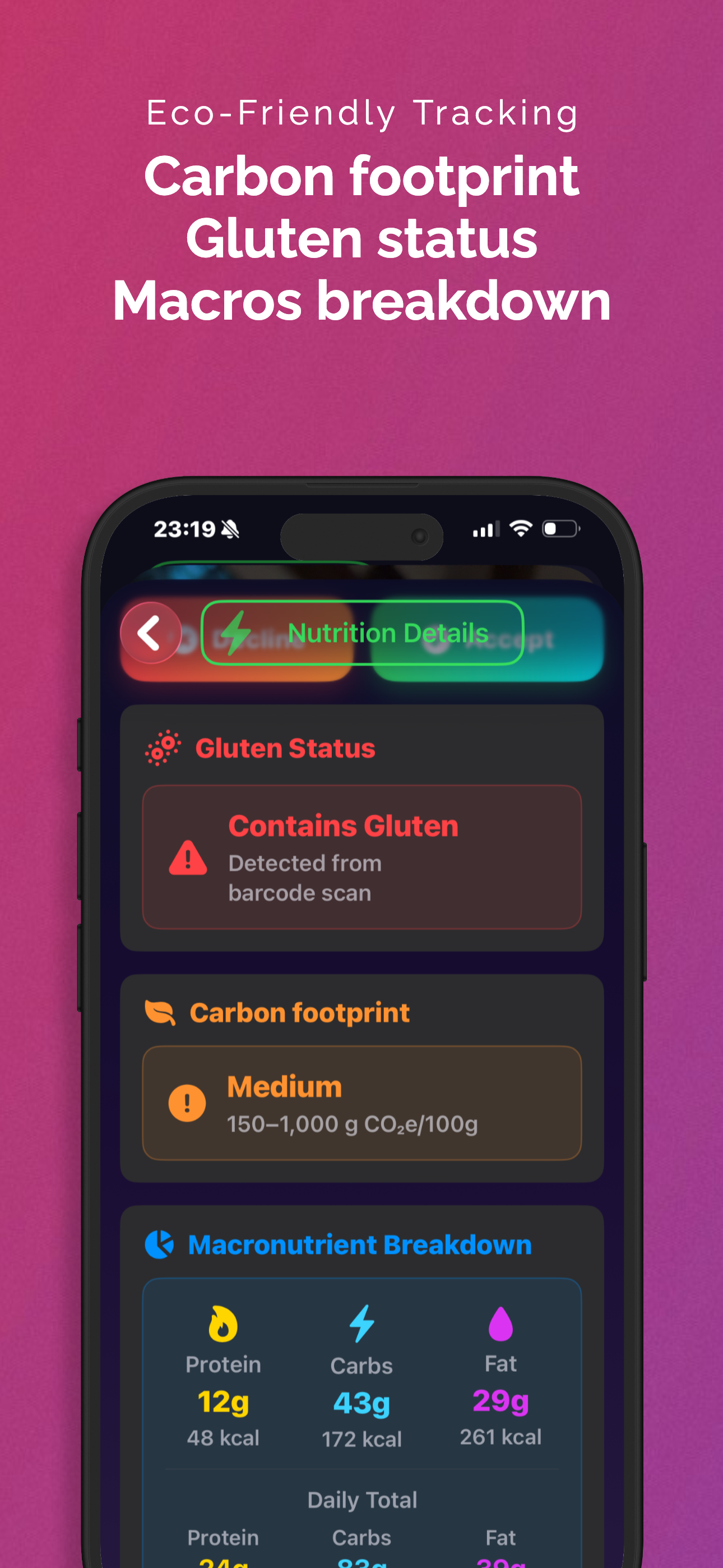
Reduce Your Carbon Footprint
Track and reduce CO2 emissions from your food choices while losing weight
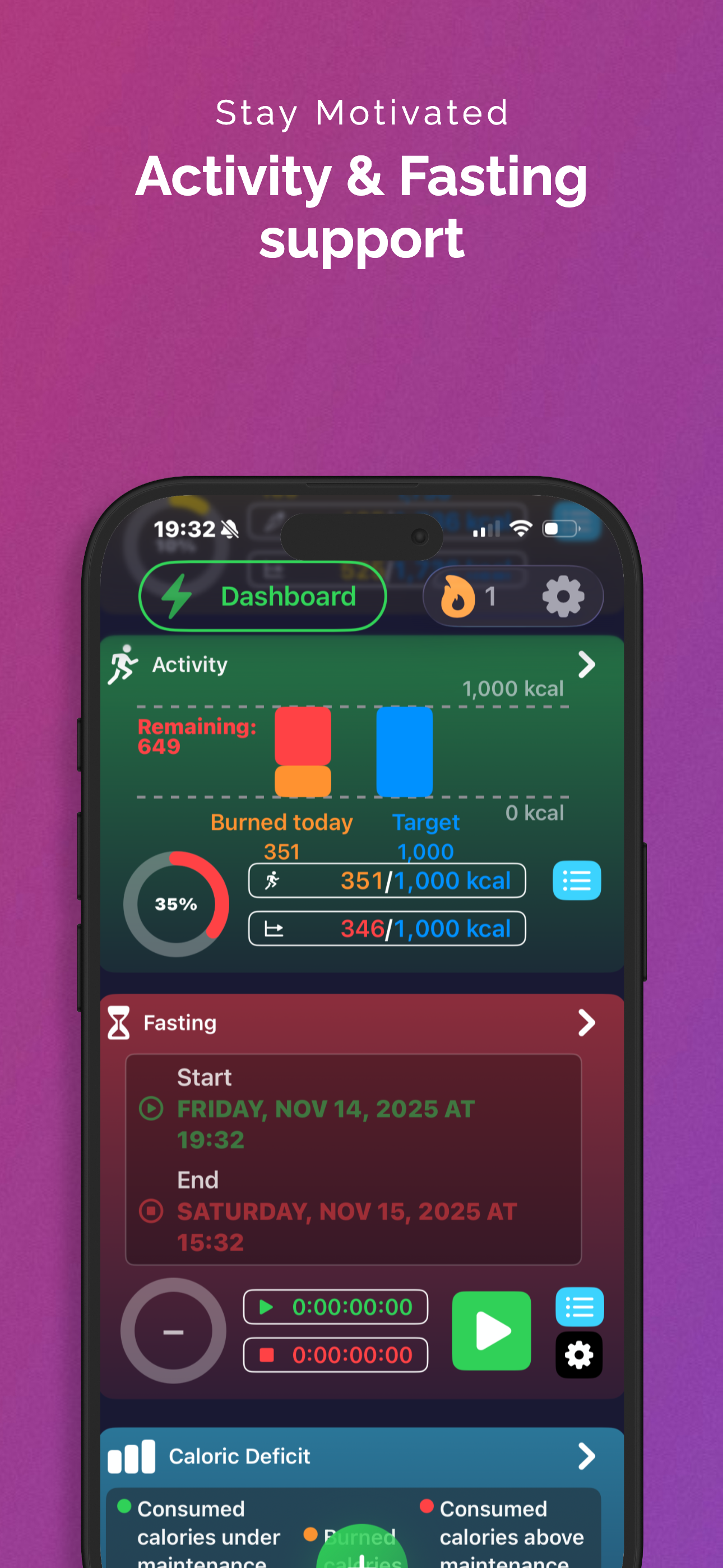
Visualize Fasting impact
Visualize fasting windows—and their direct effect on your weight
Features
Science-backed features for sustainable weight management
See an AI-generated photo of your body at your goal weight
AI scores your muscle groups from a photo and shows how you rank
Project your weight trend from recent data and goals with the Auto-Zoom chart.
Budget-based calorie tracking - a simple 'spend vs. budget' approach
Take a photo, receive instant calorie estimates with 50 scans daily.
Scan barcodes for precise instant calorie estimates and gluten status
Visualize fasting windows—and their direct effect on your weight
View your daily deficit/surplus against your target with visual charts.
Track the environmental impact (CO₂e) of your food choices
Gluten indicators based on barcode scanning and meal analysis
Sync your fitness tracker. Visualize weight impact by workout intensity. No tracker? Our 'Add Activity' feature covers 45+ sports
Animated %-to-goal gauge + exclusive Auto-Zoom weight chart with prediction—see progress and when milestones hit.
Science-Backed
Peer-reviewed references supporting weight forecasting, energy balance, carbon footprint of diets, gluten detection, nutrition databases, and AI food analysis.
Weight forecasting employs predictive models grounded in energy balance principles to estimate future weight trends based on recent data. Research indicates that self-monitoring of weight and calorie intake, along with trend smoothing to mitigate daily fluctuations, aids individuals in comprehending their trajectory and making timely adjustments. Short-horizon predictive modeling transforms your recent trajectory into actionable forecasts that promote adherence and foster long-term habits.
Obesity (Silver Spring, Md.) · 2025
Demonstrates the importance of accurate body composition measurement in tracking weight changes, supporting the need for trend smoothing in weight forecasting models.
Annals of behavioral medicine : a publication of the Society of Behavioral Medicine · 2025
Demonstrates how self-monitoring and feedback mechanisms facilitate long-term weight maintenance, validating the strategy of offering clear forecasts and trend visualization.
Pre-set calorie budgets with clear "within budget" or "over budget" feedback assist users in making informed food choices in real-time. Research indicates that this decision-support strategy enhances adherence to calorie goals by minimizing cognitive load and offering immediate, actionable feedback. The straightforward "spend vs. budget" framework aligns with principles of behavioral economics, which suggest that individuals make better decisions when they have clear constraints and receive instant feedback on their choices.
Annals of behavioral medicine : a publication of the Society of Behavioral Medicine · 2025
Demonstrates that structured goal-setting and feedback mechanisms enhance adherence to dietary targets, thereby supporting the budget-based calorie approach.
Nature medicine · 2023
Demonstrates that structured calorie management approaches enhance adherence and outcomes compared to standard care.
Energy balance—the relationship between calories consumed and calories burned—is the primary factor influencing weight change. Research consistently indicates that establishing a calorie deficit results in weight loss, whereas a surplus results in weight gain. Visualizing this deficit in real-time aids users in comprehending how their daily choices affect their progress towards their goals. The app simplifies the concept of energy balance, illustrating the difference between current intake and target, as well as the adjustments needed to bridge that gap.
Obesity (Silver Spring, Md.) · 2025
Confirms that energy balance is the fundamental mechanism driving weight change, validating the calorie deficit approach.
Nutrients · 2022
Demonstrates that a calorie deficit, irrespective of timing, facilitates weight loss, reinforcing the energy balance principle.
Artificial intelligence and machine learning facilitate automated food recognition through photos, text descriptions, and barcode scanning. Research indicates that AI-driven nutrition estimation can achieve reasonable accuracy for common foods, assisting users in logging meals more efficiently and consistently. The integration of photo analysis, barcode scanning, and text parsing generates various methods for food logging, thereby lowering barriers to self-monitoring and enhancing adherence to calorie tracking.
Communications medicine · 2025
Demonstrates how AI and large language models can accurately estimate nutrition from food images and descriptions.
Journal of imaging · 2025
Demonstrates that AI can extract nutritional information from food labels, facilitating both barcode and text-based food logging.
Food production accounts for a significant portion of global greenhouse gas emissions. Research shows that different foods have vastly different carbon footprints, and dietary choices can substantially impact environmental sustainability. Tracking the carbon footprint of meals helps users understand the environmental impact of their food choices and make more sustainable decisions. Studies demonstrate that even small dietary changes can meaningfully reduce carbon emissions.
The American journal of clinical nutrition · 2025
Demonstrates that sustainable dietary patterns can lower greenhouse gas emissions while enhancing diet quality, thereby validating the tracking of carbon footprints.
The American journal of clinical nutrition · 2025
Demonstrates the relationship between diet quality and environmental sustainability, supporting carbon footprint awareness in food choices.
For individuals with celiac disease or gluten sensitivity, it is crucial to avoid gluten for their health. Research indicates that even minimal amounts of gluten can trigger symptoms and cause long-term harm in sensitive individuals. Barcode scanning and food analysis can assist in identifying products that contain gluten, offering a rapid screening method to support adherence to a gluten-free diet. While the app provides indicators based on product information, it is important to understand that it serves as an estimator and should not replace thorough label reading or professional medical advice.
Nutrients · 2024
Reviews diagnostic methods for celiac disease, emphasizing the significance of precise gluten detection for individuals with celiac disease.
Food chemistry · 2024
Reviews technological approaches to gluten detection in foods, supporting the use of food analysis for gluten screening.
Track your weight with budget-based calorie control and motivating charts
Download LyteFast today and get your 3-day free trial.
Download on App StoreCancel anytime • 151 languages